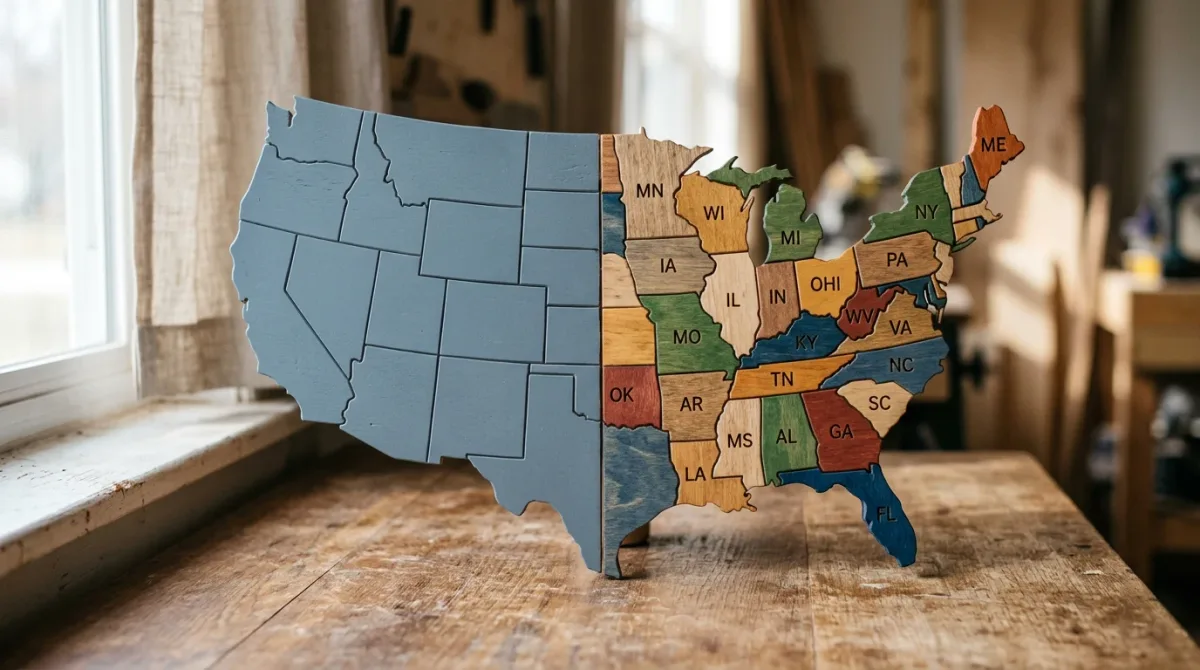
Eighteen states and the District of Columbia have enacted laws pledging all of their electoral votes to whoever wins the national popular vote, provided enough states join to control a majority of the Electoral College, according to the compact's sponsoring organization. The agreement remains short of the 270 electoral votes needed to take effect.
What Is the National Popular Vote Compact?
The National Popular Vote Interstate Compact is an agreement among states to award all of their presidential electors to whichever candidate wins the most popular votes nationwide, but only once member states collectively control a majority of the Electoral College. As of this writing, 18 states and Washington, D.C. have joined, representing 222 of the 270 electoral votes required to activate it, according to National Popular Vote Inc., the organization that drafted and promotes the compact.
Under the system now in place nationwide, the National Archives notes that a candidate needs 270 of 538 electoral votes to win the presidency. Forty-eight states and D.C. award all of their electoral votes to whichever candidate wins that state's popular vote; Maine and Nebraska split their votes by congressional district. If no candidate reaches a majority, the House of Representatives chooses the president, with each state delegation casting a single vote, and the Senate chooses the vice president from the top two finishers.
| Current System | National Popular Vote Compact | |
|---|---|---|
| How a state's electors are chosen | Winner of that state's popular vote (by congressional district in Maine and Nebraska) | Winner of the national popular vote, once the compact takes effect |
| Threshold to operate | Already governs every presidential election | 270 electoral votes among member states |
| Who controls the rules | Each state sets its own electoral method | Member states bound by identical compact language |
The calendar for choosing a president is fixed regardless of which system applies: elections are held in November, electors meet in their home states in December, Congress formally counts the electoral votes in January, and the winner is inaugurated on January 20, according to the National Archives' timeline. The compact would not change that calendar — it would only change which candidate each member state's electors are pledged to support.
What's the Case for Joining the Compact?
National Popular Vote Inc. argues the presidency should go to whoever wins the most votes across all 50 states, describing it as an extension of the "one-person, one-vote" principle. The organization says five of the nation's 47 presidents took office without winning the national popular vote, and contends that under the current system, presidential campaigns concentrate their attention on a small number of competitive states while treating the other 43 states as largely settled, drawing comparatively little candidate attention there.
Proponents also argue the compact does not require amending the Constitution, since Article II gives state legislatures the authority to decide how their own electors are appointed. Colorado's 2019 law adopting the compact, for instance, was passed as ordinary state legislation rather than a constitutional change, according to the bill record kept by the Colorado General Assembly.
What's the Case for Keeping the Current System?
Defenders of the current arrangement point to the state-by-state design built into the Constitution itself. The National Archives' guidance on the Electoral College directs readers to the Federalist Papers "for the founders' views," citing Alexander Hamilton's design for the Electoral College in Federalist No. 68 as the founding-era explanation for choosing the president through state-based electors rather than a direct national tally.
Because the compact only takes effect once states holding a majority of electoral votes join, opponents in state legislatures have used the normal legislative process to slow or block it rather than pursue a constitutional amendment. In Colorado, the bill record shows Republican lawmakers offered multiple floor and committee amendments to SB19-042, all of which were rejected by roughly similar margins, and a motion to subpoena the state attorney general also failed, before the bill passed and was signed into law.
How Has This Played Out in State Legislatures?
Colorado's experience illustrates how the fight over the compact plays out chamber by chamber. SB19-042, sponsored by state Sen. Mike Foote and state Reps. Emily Sirota and Jeni Arndt, created Colorado's membership in the compact. According to the Colorado General Assembly's official bill page, the measure cleared committee and floor votes over Republican objections, including rejected committee amendments by a 3-6 margin and floor amendments defeated by roughly 22-40 margins, and was signed into law on March 15, 2019.
That pattern — a compact bill introduced, opposed through amendments and procedural motions, and then passed largely along party lines — has repeated in other state capitols as the compact has grown from a handful of founding members to its current 18 states plus D.C.
What Happens Next?
The compact needs roughly 48 more electoral votes to reach the 270-vote threshold, meaning several additional states would have to enact it before it could govern a presidential election. No congressional action is required to activate it, since the compact operates entirely through state law under each legislature's constitutional authority over how its electors are chosen, a point both the compact's backers and the bill record in Colorado confirm.
Legislation to join the compact remains pending or has been introduced in multiple statehouses in recent years, and opponents have continued to contest it through the same kind of floor and committee votes seen in Colorado's 2019 debate rather than through a court challenge or a constitutional-amendment push. Because the compact only binds the states that sign it, any member state could also withdraw before an election in which it would apply, subject to the compact's own withdrawal terms. Barring a wave of new state signatories reaching the 270-vote mark, the current state-by-state Electoral College system will continue to govern the next scheduled presidential election.
For a related politics perspective, read Ben Affleck and Matt Damon Make a Splash on Gossip Stone TV.