Policy follows measures from proposal to the day they bind: drafting, consultation, amendment, implementation and review. Coverage centers on taxation, public spending, trade rules, and sector regulation, with fiscal cost and effective dates given. Intended for advisers, compliance staff and executives who must plan against rules not yet final.
The deficit is the yearly gap between spending and revenue. The debt ceiling is a legal cap on total federal borrowing. Here is how the two differ, and why mixing them up makes every budget standoff harder to follow.
The debt limit caps how much the Treasury may borrow to pay for spending Congress already approved, and hitting it without an increase would force choices among payments no law currently defines.
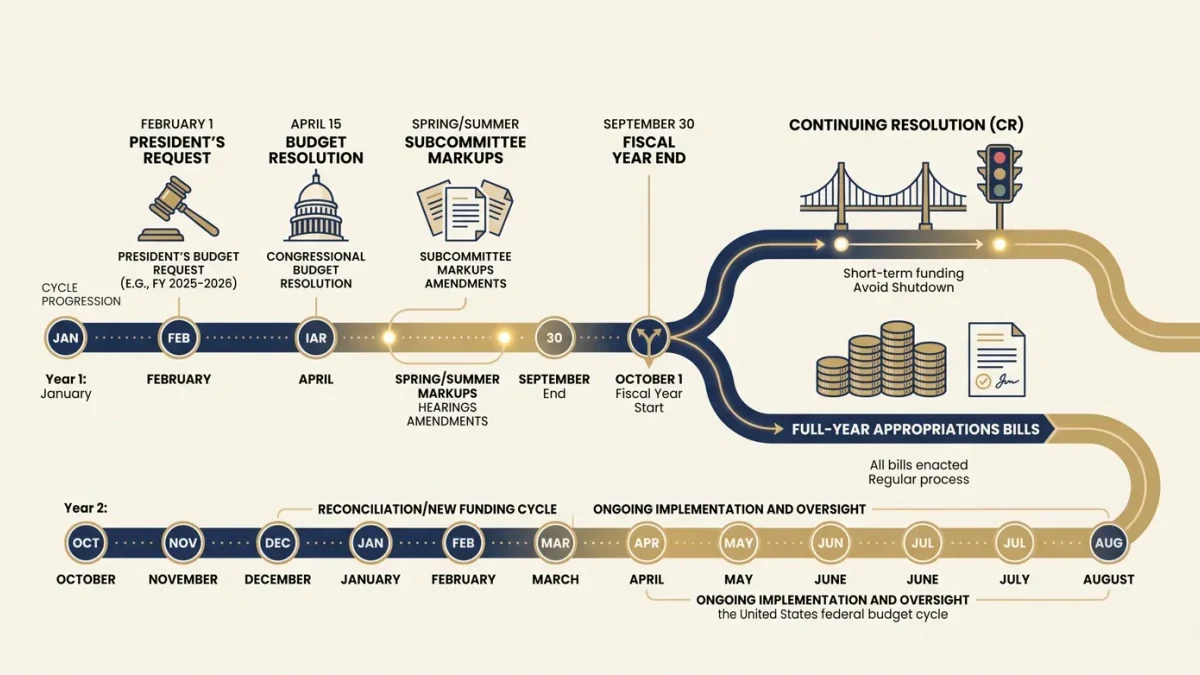
Congress has finished its full appropriations process on time only three times in 47 years, making stopgap spending bills the routine way agencies stay funded.
The budget year runs a 20-month production cycle — president's request, spring resolutions, summer marks, October 1 funding deadline — and every stage slips.