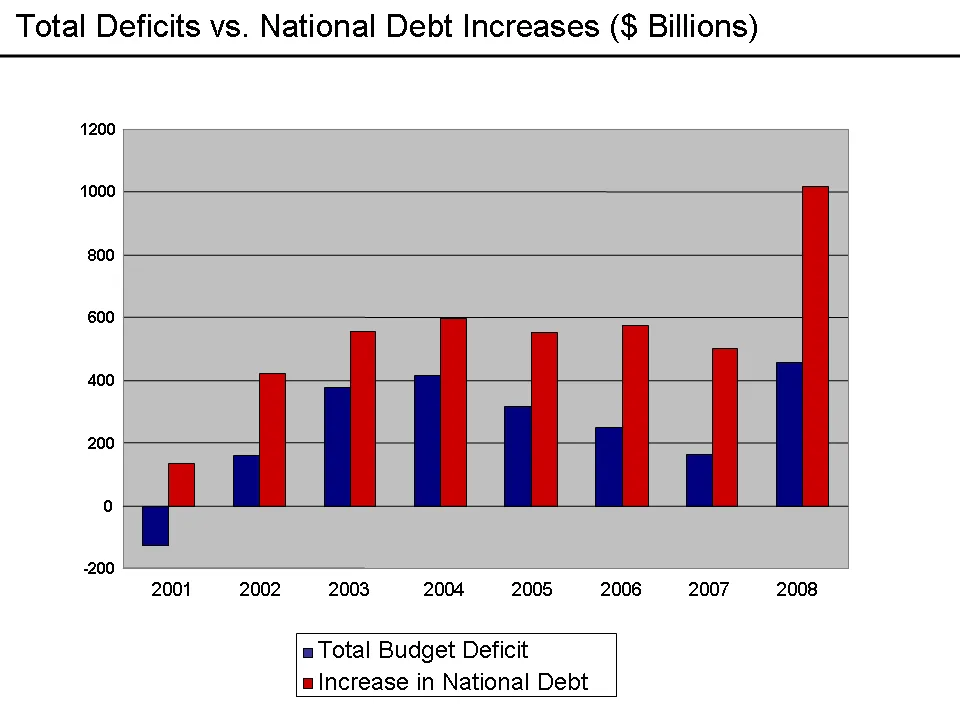
Budget season brings two terms that sound almost identical: the deficit and the debt ceiling. People often use them as if they were the same thing. They are not, and the gap between them shapes some of the biggest standoffs in Washington.
The deficit measures a yearly gap between spending and revenue. The debt ceiling caps the total amount the government may borrow. One is about new bills. The other is about paying old ones.
The Deficit Is a Yearly Gap
Each year, the president puts forward a federal budget. Congress passes it, sometimes with changes. The plan lists projected tax collections and spending, and it shows how much borrowing the government would need for the fiscal year. When spending runs ahead of revenue, the gap is the deficit. That gap gets funded by borrowing. According to Wikipedia's overview of the debt ceiling, the United States has borrowed to finance its budget since 2002, running a structural budget deficit. We covered a connected angle in What the Debt Limit Is, and What Happens if Congress Misses It.
The Debt Ceiling Is a Cap on Total Debt
The debt ceiling is a law that limits the total amount of money the federal government can borrow. It does not cap new spending directly. It caps the total national debt. That total includes debt held by the public and debt held in government accounts. Congress created the ceiling in 1917 to control borrowing. Before that, it approved each debt issue on its own. Readers following this should also see How the Federal Budget Timeline Actually Works.
The cap has moved many times. According to Wikipedia's debt ceiling overview, since 2025 it sits at $41.1 trillion, after a $5 trillion increase passed through the One Big Beautiful Bill Act.
Raising One Does Not Raise the Other
This is where most confusion starts. Raising the ceiling does not increase the deficit. Cutting it would not shrink the deficit either. The Government Accountability Office explains it this way: "the debt limit does not control or limit the ability of the federal government to run deficits or incur obligations. Rather, it is a limit on the ability to pay obligations already incurred." In short, the ceiling covers bills the government has already rung up.
What Happens When the Cap Is Hit
When the Treasury nears the limit, it turns to what officials call "extraordinary measures" to keep paying obligations for a while. That buys time, but not much. If Congress does not raise the cap, a breach and a long default could trigger a widespread financial crisis and push the economy into a recession, according to Wikipedia's summary. The country has never failed to pay its debts, though it has come close. In 2011, a standoff led to the first downgrade of the U.S. credit rating, a sharp drop in the stock market, and higher borrowing costs.
Why the Fight Keeps Coming Back
Because Congress must raise the ceiling, the vote gives lawmakers leverage over the budget even though it does not set the budget. Some scholars have questioned whether the ceiling is constitutional at all. Calls to abolish it have come from across the political spectrum. Defenders say it forces a needed debate over debt. Critics say it risks default over bills that were already approved. Both sides agree on one point: the stakes are high, and the deadline keeps arriving. The fight over the cap is really a fight over past spending, not future plans.
Conclusion: One Tracks New Spending, the Other Pays Old Bills
The deficit is the yearly gap between what Washington spends and what it collects. The debt ceiling is the legal cap on the total debt built up from past gaps. One is set by budget choices. The other must be lifted before the Treasury can pay what is already owed. Mixing them up is easy. Knowing which is which makes every debt standoff far easier to follow.