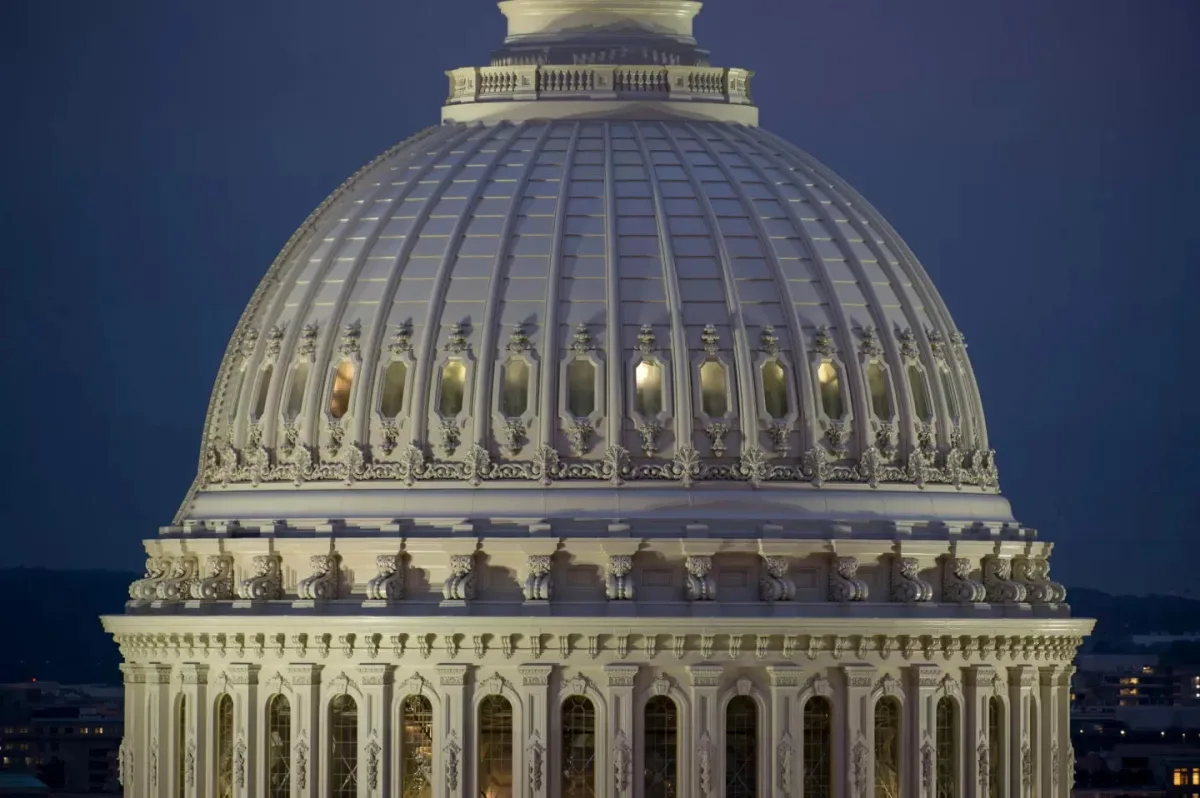
Congress kept the federal government open past a lapse in funding by passing the Continuing Appropriations Act, 2026, a stopgap measure the House approved 222-209 on Nov. 12, 2025, after Senate passage, funding most agencies at fiscal year 2025 levels through Jan. 30, 2026, according to the Senate Appropriations Committee.
Lawmakers use continuing resolutions, or CRs, when they cannot finish the dozen annual appropriations bills before the Oct. 1 start of the federal fiscal year. Rather than let agency funding lapse and trigger a shutdown, Congress passes a temporary measure that extends existing funding, usually at the prior year's levels, for a set period. The Continuing Appropriations Act, 2026 was itself passed to reopen government operations after a lapse, and it paired the stopgap funding with three full-year fiscal year 2026 appropriations bills covering Military Construction and Veterans Affairs, Agriculture and the FDA, and the Legislative Branch, according to the Senate Appropriations Committee.
What funding levels does a CR set?
The Continuing Appropriations Act, 2026 funded covered agencies and programs "at a rate for operations as provided in the applicable appropriations Acts for fiscal year 2025," meaning agencies received amounts matching their prior-year spending rather than new appropriated totals. The measure applied to a specific set of accounts, including Military Construction and Veterans Affairs programs, Agriculture Department and Food and Drug Administration operations, the Legislative Branch, and SNAP and WIC nutrition programs, and it also provided back pay to federal workers. Funding under that CR ran until a regular fiscal year 2026 appropriation for a given program was enacted or until Jan. 30, 2026, whichever came first, per the bill text posted by the Senate Appropriations Committee.
What can't agencies do while operating under a CR?
The Continuing Appropriations Act, 2026 barred agencies from starting new programs or projects that were not previously funded, prohibited new weapon production starts, and blocked reduction-in-force actions during the funding period, according to the bill text. Those restrictions are typical of continuing resolutions generally: because Congress has not finished setting final-year funding levels, agencies are expected to maintain current operations rather than launch new initiatives, sign multi-year contracts, or make large programmatic changes until full-year appropriations are enacted.
How do CRs affect day-to-day agency operations?
A Government Accountability Office review of six federal agencies operating under continuing resolutions found the stopgap funding created recurring inefficiencies. The most common problem agencies reported was delays to activities such as hiring and repetitive administrative work, including issuing multiple smaller grants or contracts instead of single annual awards, GAO found. Agencies said they delayed filling positions because they were uncertain whether final appropriations would support the additional staff, a problem GAO noted was especially costly for functions requiring lengthy training pipelines, such as veterans benefits processing. Agencies also reported added administrative burden from repeatedly drafting spending plans and issuing new guidance each time a CR was renewed, and one agency, the Veterans Health Administration, estimated $1 million a month in lost productivity attributable to CR-related uncertainty, according to the GAO review. The FBI separately reported spending more than 600 hours managing CR-related administrative tasks in a single year, GAO found. Agencies also told GAO that operating under successive CRs entered them into multiple short-term contracts tied to each extension rather than single annual agreements, and one agency, the Administration for Children and Families, issued multiple smaller grants to the same recipients instead of one annual award. GAO also found that longer CRs compressed the time remaining in the fiscal year to execute a budget once full-year funding finally arrived, making it harder for agencies to implement new programs or funding changes.
What comes next for fiscal year 2027 funding?
With the fiscal year 2026 continuing resolution's restrictions and the pattern of short-term extensions still fresh, the House Appropriations Committee has begun moving individual fiscal year 2027 spending bills through committee ahead of the Oct. 1, 2026 start of the next fiscal year. The committee approved the Fiscal Year 2027 Legislative Branch Appropriations Act by a vote of 34-28 on May 20, 2026. "After months of hard work preparing the Fiscal Year 2027 bill...I'm proud to see it advance out of full committee markup," Legislative Branch Subcommittee Chairman David Valadao, R-Calif., said in a statement released by the committee. Appropriations Committee Chairman Tom Cole, R-Okla., said the bill "equips the People's House to uphold the trust placed in it through responsible governance." The committee's statement did not address the broader timeline for the remaining fiscal year 2027 spending bills or whether another continuing resolution will be needed to avoid a lapse when the new fiscal year begins. If lawmakers do not enact the remaining fiscal year 2027 bills, or another continuing resolution, before Oct. 1, agencies without appropriations would face the same kind of funding lapse that preceded the Continuing Appropriations Act, 2026 the prior fall, according to the Senate Appropriations Committee's account of that earlier episode.
CR vs. full-year appropriations
| Feature | Continuing resolution | Full-year appropriations bill |
|---|---|---|
| Funding level | Typically prior year's rate | New level set by Congress for the current year |
| Duration | Fixed short period until a set date | Full fiscal year |
| New programs or projects | Generally prohibited | Permitted as enacted |
| Agency flexibility | Limited; conservative spending expected | Full programmatic flexibility within enacted limits |
Both chambers must still act on the remaining fiscal year 2027 bills, or pass another continuing resolution, before current funding authority lapses. Congress can also combine the two approaches, as it did with the Continuing Appropriations Act, 2026, pairing a short-term CR for most agencies with full-year appropriations already finished for a smaller group of accounts.
For a related policy perspective, read How a Continuing Resolution Actually Funds the Government.