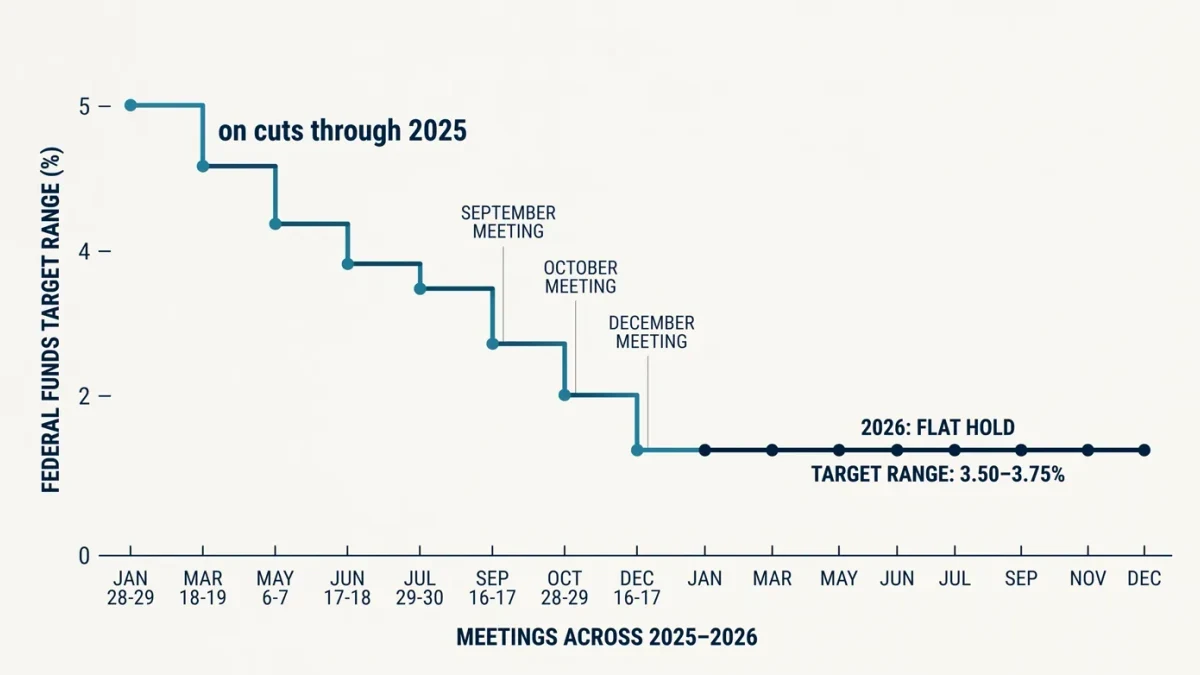
The Consumer Price Index is the federal government's headline measure of inflation, produced monthly by the Bureau of Labor Statistics from roughly 80,000 price quotes collected from businesses and rented-housing units across urban America. The index's 12-month change is the number that drives cost-of-living adjustments for Social Security — over 70 million beneficiaries — and inflation adjustments for tax brackets, food-stamp benefits, and federal rent thresholds. Through the first half of 2026, the Fed was holding its policy rate at 3.50 to 3.75 percent while watching exactly this series, per Federal Reserve statements.
How is the market basket built?
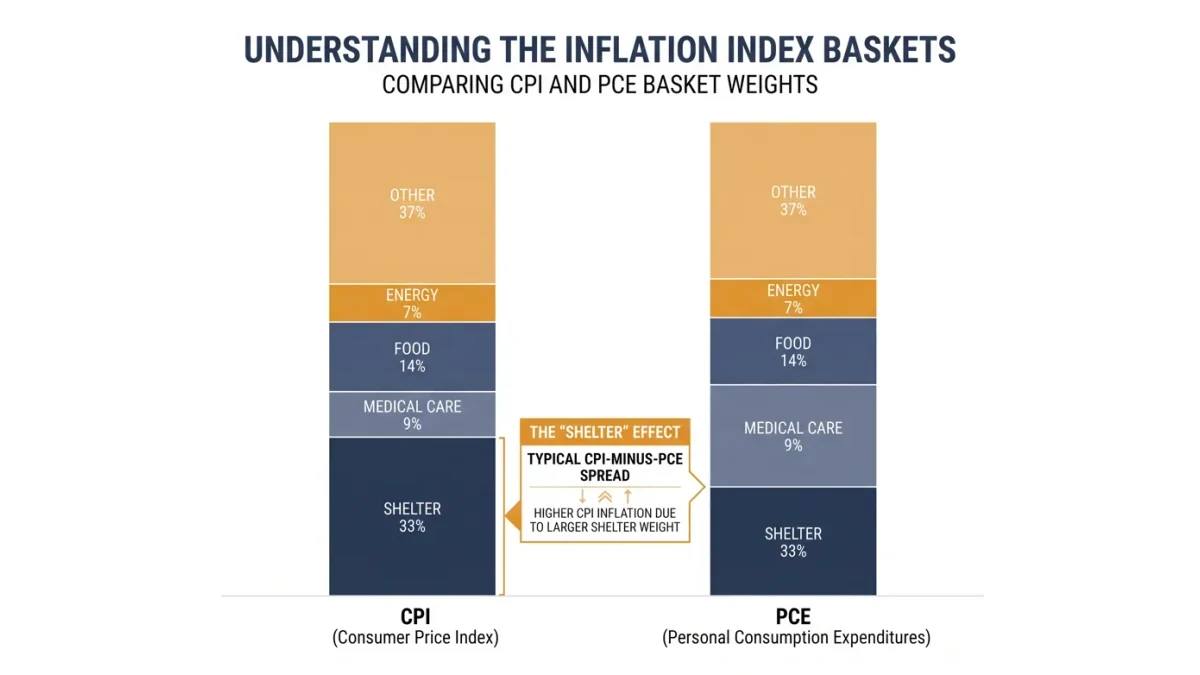
The CPI measures the cost of a fixed basket representing consumption by urban households, weighted by spending shares from the Consumer Expenditure Survey, in which roughly 20,000 households report their buying each quarter. Eight major categories carry the weights: shelter, food, energy, transportation, medical care, apparel, recreation, and education-communication. Shelter is the largest single component at roughly a third of the index — which is why housing costs dominate CPI debates — while food is about 13 percent and energy about 6 percent, per BLS handbook weights updated annually. Each month, BLS economic assistants collect prices for specific items — the same cut of meat, the same size appliance — from stores and websites, and rent data come from a survey of rental units.
What is the difference between headline and core CPI?
Core CPI strips out food and energy prices, the two categories that move most with weather and geopolitics. The idea is to see the underlying trend: gasoline can swing 20 percent in a quarter on oil-supply news without telling you anything about durable inflation pressure. The Federal Reserve's preferred inflation gauge is a different index — the Personal Consumption Expenditures price index from the Commerce Department — which covers a broader set of households and lets weights shift faster, and typically runs below CPI. When core CPI and core PCE diverge for long, the difference is usually measurement: PCE uses business survey data for some categories where CPI uses out-of-pocket consumer prices, medical care being the classic case.
What methodological choices matter most?
Three. First, shelter: the CPI's rent measure lags market rents by many months because the sample rotates slowly and leases reset gradually, so the index understates housing inflation when rents accelerate and overstates it when they fall — a lag that shaped the 2023–2025 disinflation debate. Second, quality adjustment: when a new phone costs the same but does more, BLS adjusts the price for the improvement, so measured inflation can be lower than sticker experience. Third, formula effects: the headline CPI is the CPI-U, but the chained CPI (C-CPI-U), used for some indexed programs, accounts for consumers switching to cheaper alternatives and runs about 0.2 to 0.3 points lower per year.
- CPI-U: headline index for urban consumers; the default “CPI” in news coverage.
- Core CPI: excludes food and energy to reveal trend inflation.
- Chained CPI: adjusts for substitution; smaller annual increases.
Why does a decimal point matter so much?
Because the index is wired into law. Social Security's cost-of-living adjustment equals CPI-U inflation rounded to the nearest 0.1 percent; tax brackets, IRA contribution limits, and capital-gains exemption thresholds index the same way. A one-tenth-point difference in measured inflation moves tens of billions of dollars across the budget over a decade — which is why proposals to switch programs to chained CPI recur in every major deficit negotiation, and why CPI methodology is politics, not just statistics.
Methodology described follows the BLS Handbook of Methods as of February 2026.