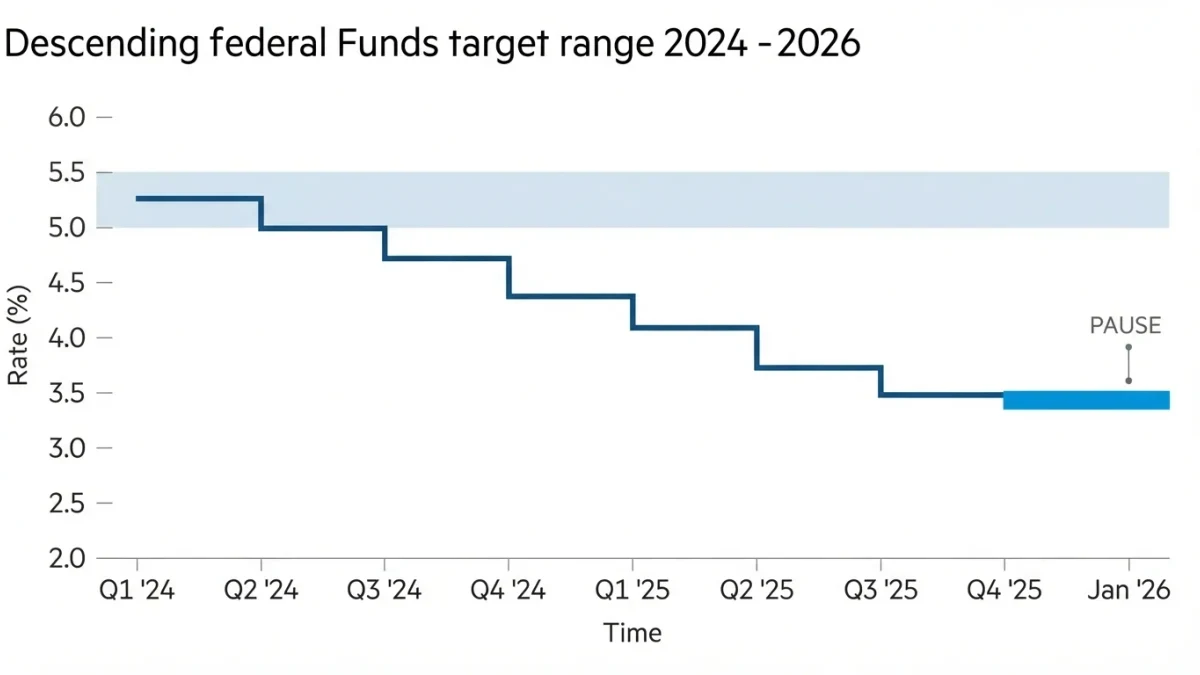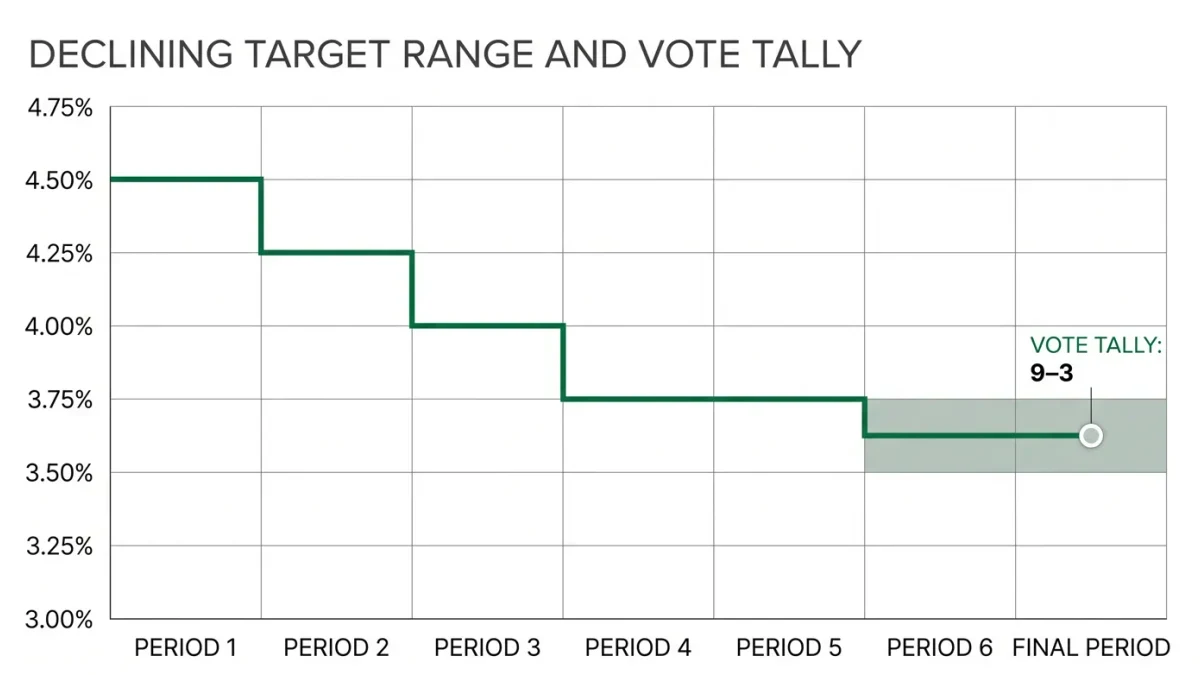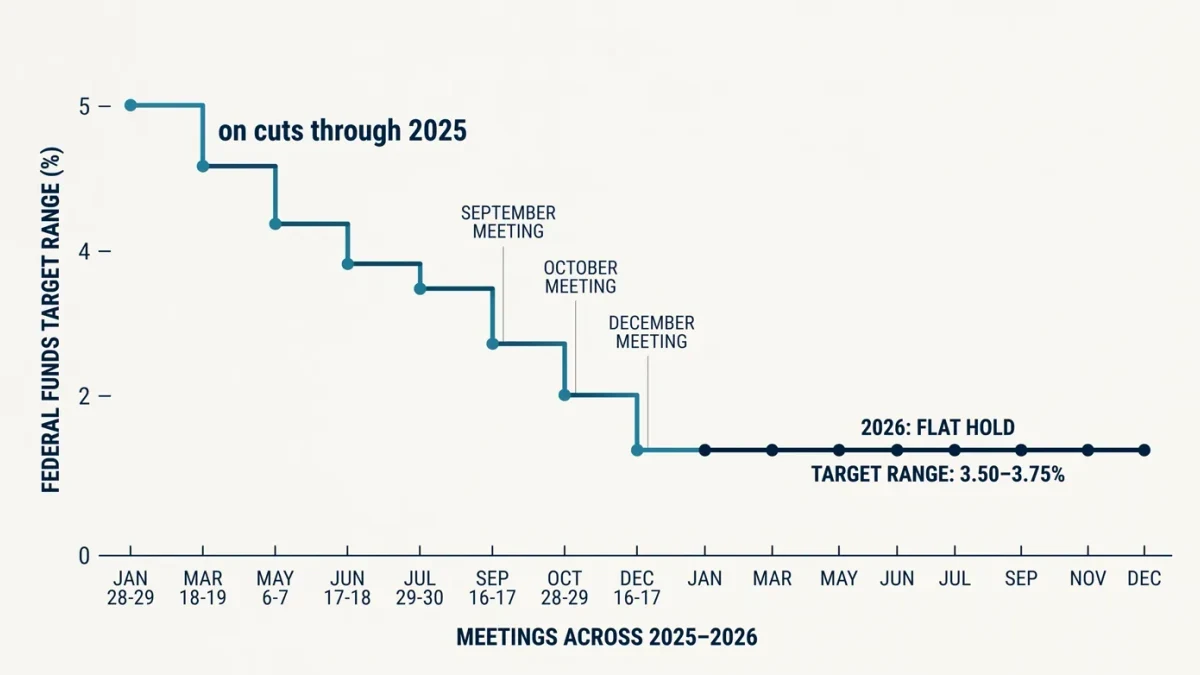
The Federal Reserve left its benchmark interest rate unchanged on July 29, 2026, holding the federal funds target range at 3.50 to 3.75 percent for every meeting of the year so far, per the Federal Reserve's post-meeting statement. The decision disappointed markets that had entered the year pricing multiple cuts, and the statement described a committee waiting for confirmation that inflationary pressures continue to fade before easing further.
What did the committee say?
The statement repeated the dual-mandate framing — the committee “seeks to achieve maximum employment and inflation at the rate of 2 percent over the longer run” — and characterized the labor market as solid and inflation as elevated but moving toward target. Reports on the meeting described a divided committee: several regional bank presidents favored an immediate cut, citing softening payroll growth, while others argued services inflation and tariff-related price pass-through argued for patience. The Fed has been balancing a cooling labor market — monthly payroll growth has run below its 2025 pace for much of the year — against consumer-price data that has declined more slowly than the committee projected in its March summary of economic projections.
Why has the Fed held all year?
The committee cut through late 2024 and 2025 to the current range, then paused as two forces offset. Goods prices absorbed tariff-driven cost pressures from the 2025 trade actions, keeping headline inflation above target months longer than the Fed's models projected, while shelter and services inflation — the stubborn core — cooled gradually. Cutting too early, the majority judged, risked repeating the 2021 error of treating supply-driven price spikes as transitory; cutting too late risked cracking an already-slowing labor market. The result is the longest hold since the 2022–2023 tightening plateau.
What happens next?
Three meetings remain on the 2026 calendar: September 15–16, October 27–28, and December 8–9, per the Fed's published schedule. Market pricing after the July meeting implied roughly even odds of at least one cut by December, and the September meeting's accompanying summary of economic projections will show whether the committee's dot plot still implies easing this year. Chairman Jerome Powell's term as chair runs to May 2026 on the leadership calendar — the president has nominated a successor whose confirmation process is before the Senate, and the transition is itself a variable markets are pricing alongside the data: incoming leadership's stance on the inflation-versus-employment balance could shift the committee's reaction function as early as the fall meetings.
What does it mean for households?
The fed funds range anchors short-term consumer rates: savings yields, credit cards, and adjustable mortgages track it within months, while 30-year fixed mortgages follow the 10-year Treasury, which prices the whole expected path — already lower than the policy rate on expectations of eventual cuts. For borrowers, the hold means floating-rate costs stay at current levels; for savers, it means yields near their cycle highs persist.
LMH News publishes information, not investment advice. Facts follow the Federal Reserve's statements and published calendar as of August 2026.