Chapter 11 of the Bankruptcy Code lets a business reorganize rather than shut down: operations continue under court supervision, a judge polices a negotiation among creditors, and the company emerges with a plan paying creditors part of what they are owed and replacing old equity with new. Corporate filings run several thousand a year by count — most small, a handful of household names — and the large cases concentrate in Delaware and the Southern District of Texas, whose complex-case panels dominate big corporate Chapter 11 practice, per federal court statistics.
What happens in the first days?
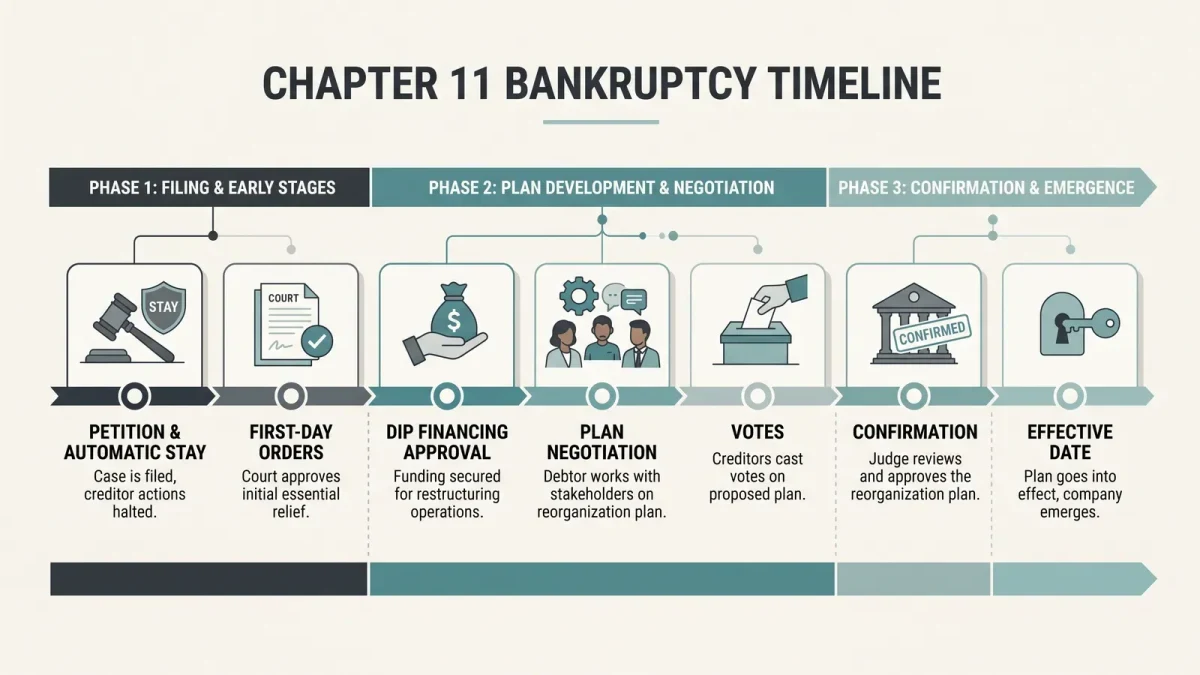
Filing the petition triggers the automatic stay: every collection action against the company stops — lawsuits, foreclosures, lenders sweeping bank accounts — instantly and nationwide. The debtor usually arrives with first-day motions: authority to pay employees and critical vendors, and in most large cases, debtor-in-possession financing, new super-priority loans that fund operations because no one else will lend to an insolvent company. The existing management typically stays as debtor in possession, running the business with the powers of a trustee but a fiduciary duty to the estate; creditors can move to replace management with a trustee only for cause, like fraud, per 11 U.S.C. § 1104.
Who gets paid, and in what order?
The priority ladder, called absolute priority, is the code's spine. Secured creditors — collateral first, up to its value; anything beyond their collateral they share as unsecured. Then the tiers: administrative expenses (lawyers, DIP lenders, post-petition trade), priority unsecured claims (wages up to caps, certain taxes), general unsecured creditors — suppliers, bondholders, litigation claimants — and only after everyone is paid in full does old equity keep anything, which in most corporate cases means shareholders are wiped out. Subordination agreements and intercreditor pacts reorder the tiers contractually. Every class of impaired creditors votes on the plan; acceptance needs a majority in number and two-thirds in amount of each class, and a judge can force through a dissenting class that is getting at least what liquidation would pay — the cramdown — if the plan does not discriminate unfairly and is fair and equitable.
- Petition and automatic stay; first-day relief and DIP financing.
- Operations continue; the debtor or creditors propose a plan (exclusivity runs about 4 months, extendable).
- Claims estimation, asset sales under § 363, lease and contract assumptions.
- Plan voting and confirmation; distributions; emergence.
What are the strategic levers?
Two dominate modern practice. Section 363 sales let the debtor auction assets free and clear of liens and successor liability — the maneuver that moved Lehman's and many retailers' businesses to buyers inside bankruptcy. Control of the plan is leverage itself: the debtor's initial exclusivity window lets management propose the deal first, and creditors who disagree can bid for the company through credit bids — using their debt as currency — or fund an alternative. Professional fees are the running joke of the field: mega-cases routinely generate nine-figure fee pools, paid before almost everyone, which is one reason speed is every stakeholder's stated preference and rarely the outcome.
What about workers and communities?
The code's priorities answer bluntly: employees' earned wages are priority claims up to statutory caps per person, with anything beyond unsecured; pensions are usually outside the estate if the plan is a separate trust, but underfunded plans push the Pension Benefit Guaranty Corporation in as a creditor, and retiree benefits are treated under § 1114 with a committee and negotiation. For a community losing a plant, Chapter 11 offers process, not protection: the economics decide, and the court's job is order, not rescue.
LMH News publishes information, not legal advice. Procedure follows the Bankruptcy Code and federal practice as of June 2026.