Jury duty is the process by which ordinary citizens are sworn in to hear evidence at a trial and decide the facts of the case. A court summons starts it. Selection narrows the pool. Service ends with a verdict, delivered after private deliberation.
Most people who receive a summons never sit on a jury. Courts call in far more candidates than any single trial needs, because lawyers on both sides screen out a large share of the pool before the panel is seated. Here is how each stage works, and why the system puts this decision in lay hands at all.
What does a jury actually do?
A jury is a sworn body of people convened to hear evidence, make findings of fact, and render an impartial verdict. That is how the reference work Wikipedia defines the institution, and the definition tracks what happens in court. Jurors listen to both sides, follow the judge's instructions on the law, and decide what the evidence shows.
The judge handles the law. The jury handles the facts. In a criminal trial, that means deciding whether the prosecution proved its case. In a civil trial, it means deciding which side's account of the dispute holds up under the evidence presented.
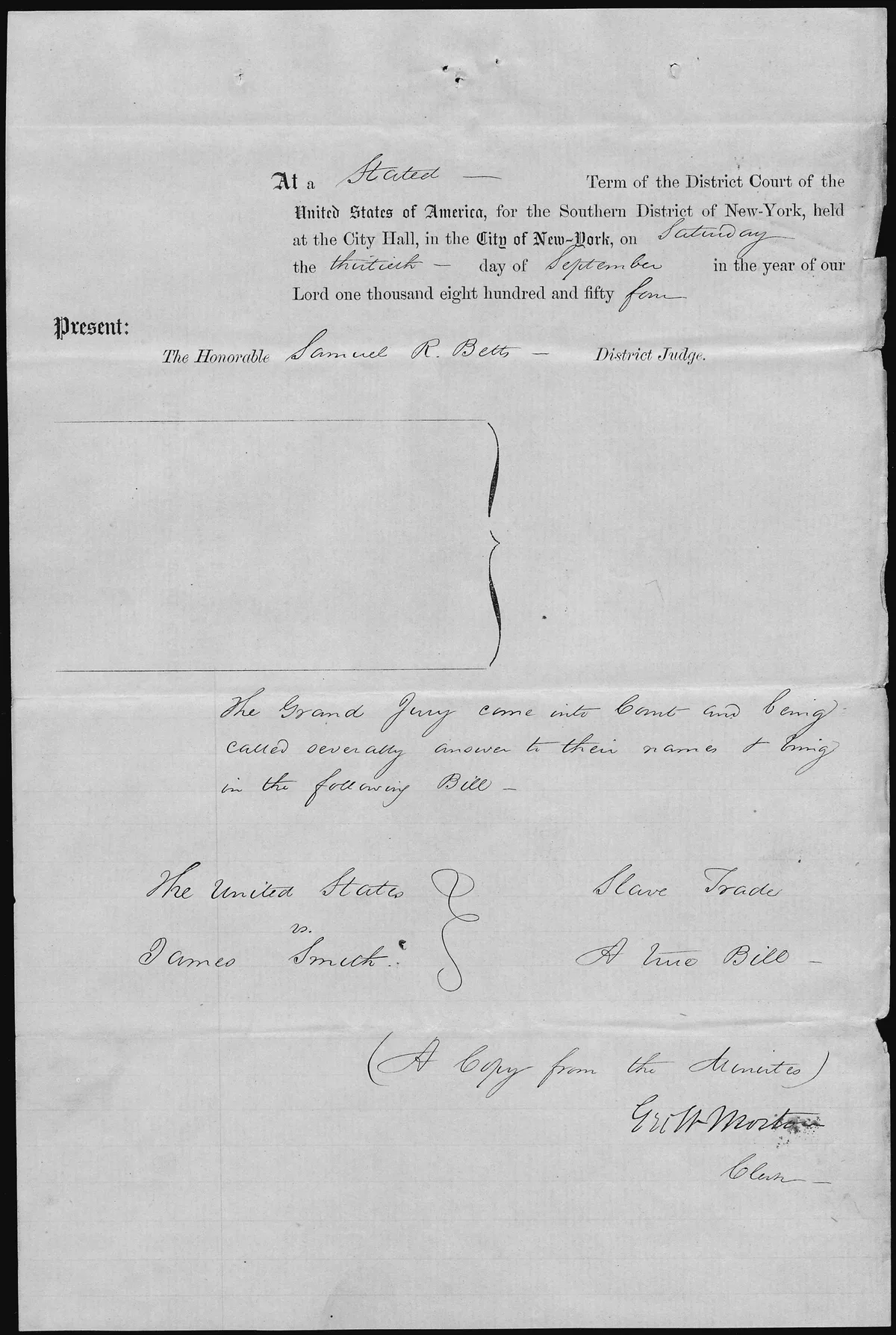
Most trial juries are what courts call petit juries, and they typically have up to 15 members. A separate body, the grand jury, does something different: it decides whether there is enough evidence for a criminal case to proceed at all. Federal grand juries have between 16 and 23 members, and the Fifth Amendment requires one before federal charges for serious crimes. Our What a Federal Grand Jury Actually Does explainer covers that process in detail.
How are jurors chosen?
Courts build jury pools by drawing names at random from the widest available population lists. The goal is a cross-section of the community, a principle now standard in federal courts and most state courts, according to Britannica. Historically, jury service carried property and competence requirements; genuine random selection replaced them.
Most jurisdictions exempt some groups, such as police officers, lawyers, and doctors. Every jurisdiction excuses a juror when service would impose undue hardship. That is the honest answer to the most common question about a summons: hardship, not reluctance, is the recognized ground to be excused.
Then comes the screening process lawyers call voir dire. Prospective jurors answer questions under oath about their backgrounds and any connection to the parties. Each side can challenge a candidate for cause, meaning a specific likelihood of bias. Each side can also strike a limited number of candidates peremptorily, without giving a reason. In high-profile trials, Britannica notes, this examination has sometimes stretched for weeks.
What happens during the trial?
Once the panel is sworn in, service follows a set rhythm.
- Opening statements. Each side outlines what it intends to prove. These are arguments, not evidence.
- Evidence. Witnesses testify and exhibits are entered. Jurors hear it all in the courtroom, in sequence, from both sides.
- Closing arguments. Each side sums up its reading of the evidence.
- Jury instructions. The judge tells the jury the legal standards it must apply.
- Deliberation. The jury retires in private to weigh the evidence and vote.
- Verdict. The foreperson announces the result in open court.
Two rules shape the whole experience. First, jurors decide only what they hear in court. Outside research, news coverage, and discussion of the case are off limits. Second, deliberations are secret. Jurors vote in private and present the verdict without giving reasons, Britannica explains. The Supreme Court held in 2017 that the federal rule barring former jurors from testifying about deliberations can yield when clear evidence shows a juror's vote to convict was significantly driven by racial animus.
What if the jury cannot agree?
The vote threshold varies. Some cases require a unanimous verdict; other jurisdictions accept a majority or supermajority. When the jurors cannot reach the required agreement, the result is a hung jury. The practical consequence is procedural, not dramatic: the judge may direct further deliberation, and if no verdict comes, the court can declare a mistrial. Whether the case is retried then falls to the prosecution or the parties, depending on the type of case.
Why unanimity in the first place? The design forces the group to talk past first impressions. A single holdout with a good-faith doubt can push eleven other people to re-examine the evidence. That friction is a feature, not a flaw, though it also explains why some trials run long.
Why does jury duty matter?
The jury is a hallmark of the English common law system, developed in England during the Middle Ages and carried to the United States, the United Kingdom, Canada, Australia, and Ireland. Most of the world's legal systems, built on European civil law, decide guilt through a professional judge instead, sometimes with lay judges alongside. By Britannica's count, more than 90 percent of all jury trials in the world now take place in the United States.
That concentration is recent. The jury spread to continental Europe through the French Revolution and Napoleon, then receded: Germany abandoned it in 1924, Hungary suspended it in 1919 and never restored it, and England narrowed its use by statute. The United States kept it broadly available. In 1968, the Supreme Court ruled in Duncan v. Louisiana that a jury trial is a constitutional right in every criminal case where the penalty may exceed six months' imprisonment. Civil jury trials are generally available in all states and federal courts as well.
Our analysis: the jury's value is not that twelve amateurs out-think a trained judge. It is that the fact-finding step sits with people who have no stake in the outcome and no career tied to it. The judge can reverse legal errors on appeal; the jury's factual verdict is the part of a trial no official reviews on the merits.
What should you do if you are summoned?
Read the summons. It states the reporting date, the courthouse, and the process for requesting an excusal or deferral, which runs through the court that issued it, not through any outside party. Courts vary on deferral rules, so the summons itself is the controlling document.
If selected for voir dire, answer honestly. The screening exists to find bias, and an honest answer about a connection to the parties serves everyone, including the side that wants you struck. If seated, the judge's instructions govern: be present, decide on the evidence, and keep deliberations inside the room.
Serving is a civic duty in the literal sense. The system only works if the random draw produces a real cross-section, and it produces one only when summoned people actually show up. For more on how courts and legal institutions operate, see our Law coverage, including How the Federal Sentencing Guidelines Work After Booker and How a Case Reaches the Supreme Court.