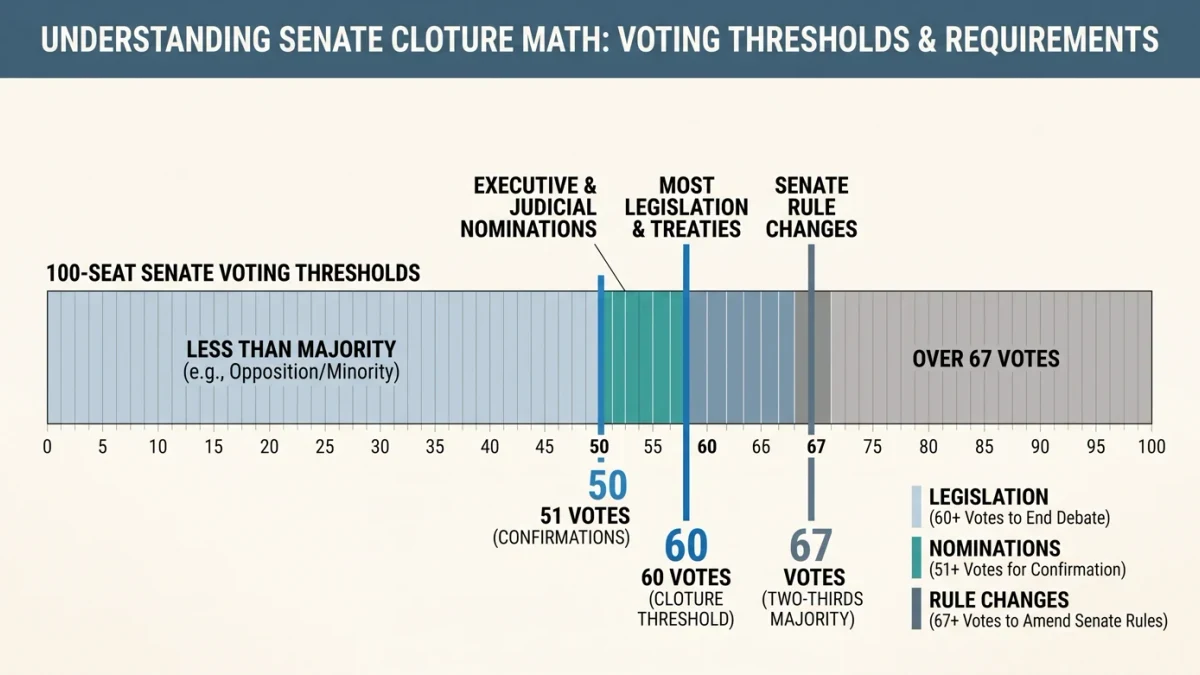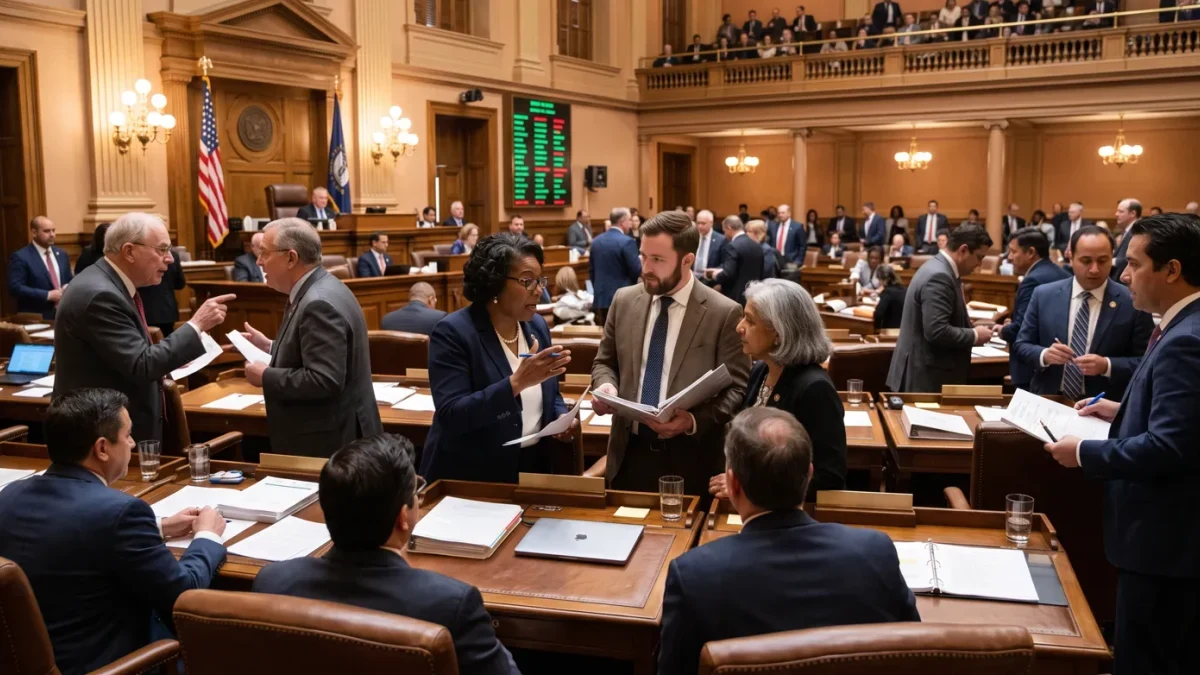
The legislative filibuster requires 60 votes to end Senate debate on most bills, and whether to abolish it is one of the sharpest procedural fights in American politics. The rule is not in the Constitution — the Senate's first rulebook allowed a simple majority to move the previous question, and the supermajority threshold grew from an 1806 rule change, per the Senate's official history. Both parties have already carved out exceptions: no filibuster applies to budget reconciliation since 1974, and majorities of both parties ended it for judicial and executive nominations in 2013 and 2017. The argument is about what remains.
What is the case for abolishing the filibuster?
Supporters of abolition, a list that has included Senator Bernie Sanders of Vermont, Senator Elizabeth Warren of Massachusetts, and former President Barack Obama, argue that the rule converts majority rule into minority veto. Their core claims: legislation with broad public support — they cite voting-rights bills that died by filibuster in 2021 and 2022 — cannot pass even when one party holds the presidency, House, and 50 Senate seats. In his 2020 eulogy for John Lewis, Obama called the filibuster a “Jim Crow relic” tied to its historical use against civil-rights bills, noting that roughly 200 anti-lynching and anti-poll-tax measures were blocked in the twentieth century. Abolition advocates also argue the carve-outs already gutted the rule's protective function — Supreme Court nominees now pass at 51 votes, so the filibuster mostly shields ordinary legislation. Their strongest version: a chamber that cannot respond to electoral mandates breeds the public sense that elections change nothing, and restoring majority action would make accountability legible to voters.
What is the case for keeping the filibuster?
Defenders — Senator Mitch McConnell of Kentucky has been the rule's most prominent guardian, alongside senators of both parties from competitive states, such as Senator Kyrsten Sinema of Arizona and Senator Joe Manchin of West Virginia while they served — argue the 60-vote threshold is what forces bipartisanship in an otherwise closely divided country. McConnell said in 2021 that eliminating it would produce a “scorched-earth Senate” where each majority rams through policies the next majority reverses. The institutional case rests on the Founders' design: the Senate as a deliberative brake, in George Washington's famous “saucer that cools the coffee” framing. Defenders note that major policy swings under simple majority rule — the 2017 tax law via reconciliation, Affordable Care Act attempts — generate policy whiplash for businesses and households that plan in multi-year horizons. Their strongest version: the filibuster protects whichever party is out of power, and majorities are fleeting; senators voting to abolish it are usually voting to disarm their own party's future shield.
How do the two sides answer each other?
Abolitionists answer the instability argument by pointing out that the carve-outs already produce instability in the domains that matter most — courts and taxes — while the filibuster blocks only the slow, negotiated lawmaking it was meant to protect. They also note the talking-filibuster reform option: making senators hold the floor physically rather than by silent notice, which preserves delay but raises the cost of obstruction. Defenders answer the Jim Crow argument by conceding the history and arguing the modern rule has protected both parties in turn — the 2021–2022 Republican minority used it, and so did Democratic minorities against Republican majorities in 2017–2018 and 2025.
What would change procedurally if it were abolished?
Formally, ending the legislative filibuster takes a ruling from the presiding officer, sustained by a simple majority — the “nuclear option” used for nominations in 2013 and 2017, per the Congressional Research Service. No constitutional amendment is involved. What follows is practical: every bill that clears committee could reach a majority vote, amendment trees would still structure debate, and the minority's leverage would shift toward offering politically difficult amendments rather than blocking passage outright.
LMH News publishes information, not political advice. Positions are attributed to their named advocates; this primer presents each side at comparable length and endorses neither.