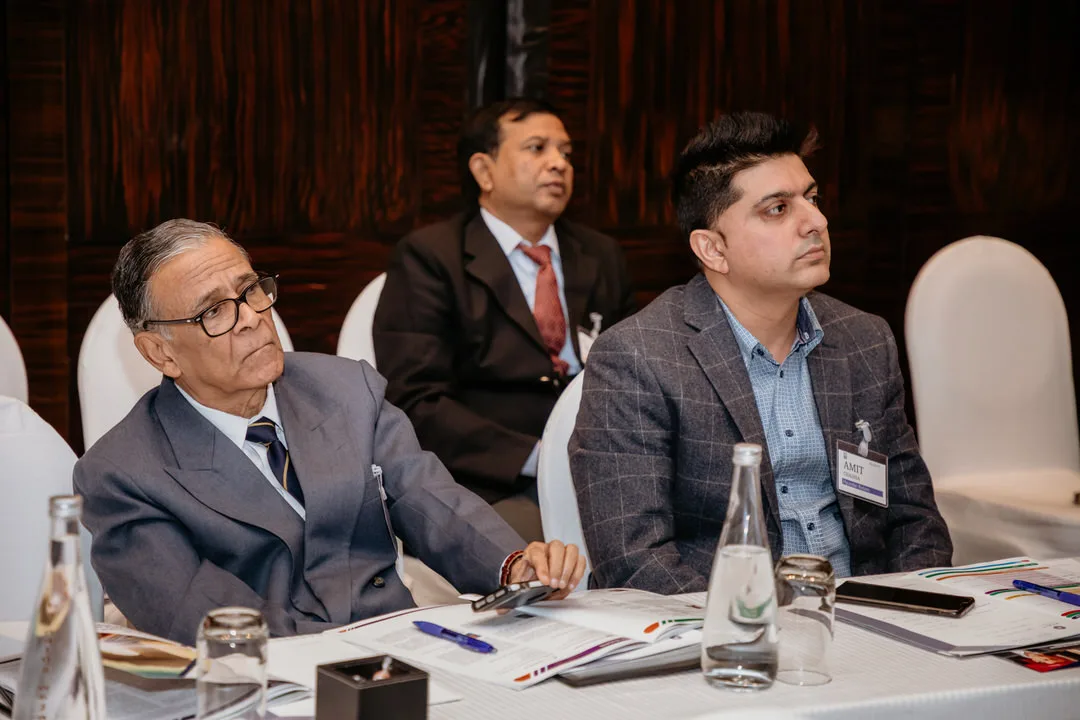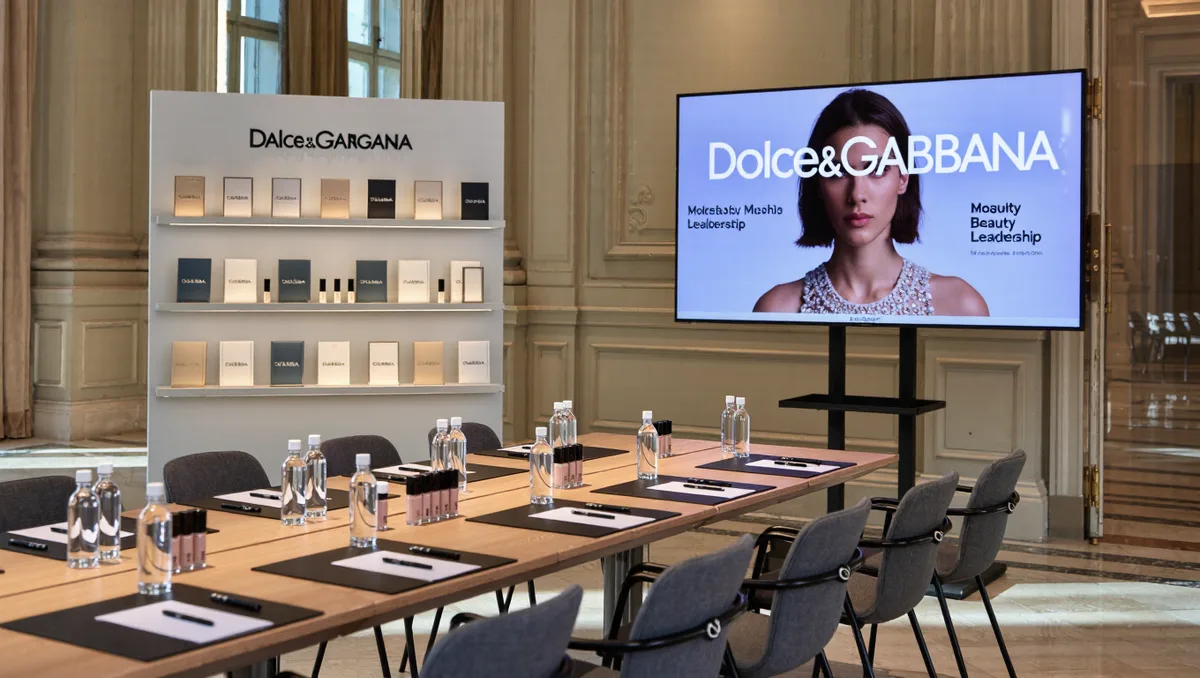
On September 10, the global CEO of Dolce&Gabbana Beauty, Gianluca Toniolo, and the brand's Managing Director for The Americas, Paolo Rosellini, spent a morning at Istituto Marangoni Miami, a fashion and design college in the Miami Design District, speaking to students in a panel and a networking reception. The school's president, Hakan Baykam, framed the visit as a way for students to hear from people shaping the industry. According to The National Law Review, the event was described as exclusive and closed with direct contact between students and both executives.
The popular read on an event like this is that it is a public-relations courtesy: executives visit a campus, say flattering things about education, and leave. That read is not wrong, but it is incomplete. When a global brand sends its chief executive and its regional managing director to the same morning panel, it is spending two of its scarcest assets, executive time and brand presence, on people who cannot yet buy much product. The likelier explanation is talent. Luxury beauty firms compete for graduates who understand both creative work and commercial operations, and a campus visit is one of the cheapest ways to make a brand visible to that group before competitors do. For related coverage, see Should Supreme Court Justices Have Term Limits? Both Sides' Best Case.
This article reads the event as evidence about how the luxury sector recruits, and about what schools such as Istituto Marangoni Miami gain from hosting it. The facts here come from a single press release distributed through EIN Presswire, which carries an "as is" disclaimer and no independent verification. That limit matters, and it shapes what can honestly be concluded.
What actually happened at the event?
The morning opened with a panel discussion in which Toniolo and Rosellini discussed leadership, the luxury beauty market, and the Dolce&Gabbana Beauty vision, per The National Law Review. It closed with a networking reception where students could speak with both executives directly. No attendance figures, program details, or hiring announcements appear in the source material. The school described the event as reinforcing its approach of connecting classroom learning with the creative industries through guest lectures and industry events.
Who said what
Baykam, the school's president and CEO, said education becomes most valuable when students engage directly with people shaping their industries, and that such conversations help students understand the realities of the global fashion and beauty landscape. Toniolo said education plays an essential role in shaping the industry's future and described hearing students' ideas as valuable. Both statements are quoted in the press release, which means both were approved for publication by the institutions involved. They should be read as institutional messaging as much as personal reflection. This connects to our earlier piece, Should the Electoral College Be Abolished? Both Sides' Best Case.
Why would a global CEO spend a morning on a campus panel?
Three mechanisms plausibly explain the visit, and the source supports only some of them directly.
- Talent visibility. The school offers programs in Fashion Design, Fashion Business, Fashion Styling, and Interior Design. Fashion Business graduates are the relevant pool for a beauty company's commercial side. A panel plus reception puts the brand in front of that pool at low cost.
- Regional positioning. Rosellini's role covers The Americas, and the school sits in the Miami Design District. A regional executive appearing at a regional campus fits a pattern of brands cultivating presence in markets where they want local talent and local attention.
- Brand narrative. Toniolo's quoted remarks emphasize "empowering the next generation of talent." That is a message aimed as much at the industry and consumers reading coverage of the event as at the students in the room.
The press release supports the first mechanism only indirectly, through the school's description of its industry-connected model. It supports the third directly, because the executive quotes are the brand's own framing. Nothing in the source establishes any hiring intent, internship, or partnership. Readers should treat the talent-pipeline reading as interpretation, not as a documented company program.
What does the school get out of it?
Istituto Marangoni Miami is an accredited institutional member of the National Association of Schools of Art and Design, and it is part of an international network of Istituto Marangoni campuses. For an accredited school in a crowded design-education market, hosting named executives from a global luxury brand is a demonstrable proof point for its pitch to prospective students: the industry comes to us. The school's own statement leans on exactly that logic, describing guest lectures and industry events as the bridge between classroom learning and the creative industries.
The trade is mutual and measurable only in reputation. The brand gets early access to a filtered pool of students who have already chosen fashion and design education. The school gets a recognizable name on its event calendar. Neither party discloses what, if anything, was promised beyond the morning itself.
What should readers take from coverage like this?
The event itself is small. The pattern it sits in is not. Luxury and beauty companies have long treated design schools as a front door for commercial and creative staff, and campus appearances by senior executives are a standard, low-cost instrument in that effort. What makes this instance worth noting is the seniority paired with the location: a global chief executive and an Americas managing director, together, at a single regional campus, on the same morning.
What remains unknown is whether the visit leads to anything structural, such as internships, recruiting commitments, or a recurring partnership. The source material announces none. Until a follow-up exists, the honest conclusion is modest: a luxury brand invested executive time in a Miami design school, both parties said education was the point, and the most concrete signal, the pairing of the two most senior relevant executives, points to talent and regional visibility rather than ceremony alone. Readers weighing design-school options or luxury-sector careers can draw their own inference from that pairing, with the caveat that everything here rests on one unverified press release.