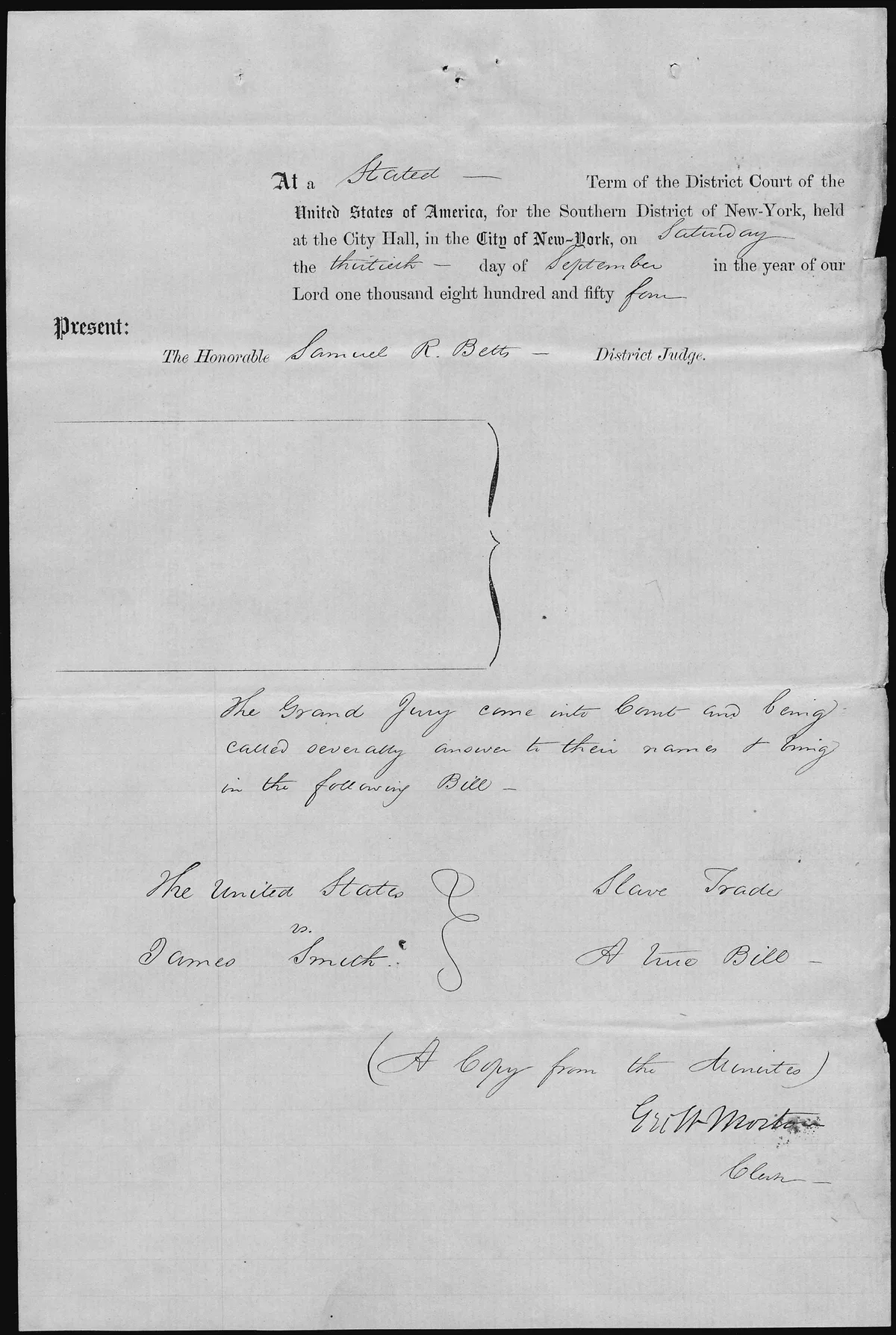
A case reaches the Supreme Court only after a losing party asks for review and at least four justices agree to grant it. The Court receives roughly 5,000 to 7,000 petitions each term and hears oral argument in only about 60 cases — an acceptance rate near 1 percent, per the Court's own annual statistics. Everything else ends with a one-line denial, and the lower court's ruling stands.
What has to happen before anyone can ask the Court?
The Supreme Court is almost entirely a court of review. A dispute normally must first run through a federal district court and, if appealed, a federal circuit court of appeals — or through a state's trial and appellate courts where the claim involves federal law. Two thresholds gate the door. Standing requires a concrete, particularized injury, not a general grievance about government policy. Finality, enforced by 28 U.S.C. § 1257 for state cases and by final-judgment rules in federal ones, means the Court usually reviews only after a case is over, with rare certified-question exceptions.
Some cases arrive on the Court's original jurisdiction — suits between states, for example, filed directly at the Supreme Court under Article III. Those are few; the Court typically appoints a special master to gather facts. In the 2020s it has decided one to two original cases per term, such as water-rights disputes between neighboring states.
How does the certiorari petition work?
The losing party below files a petition for a writ of certiorari, due within 90 days of the lower court's final judgment, extendable to 150 for good cause. The petition argues why the case meets the Court's criteria in Rule 10: a split among the circuits or state courts of last resort on an important federal question, a decision conflicting with the Court's precedents, or a pressing question the Court has not settled. The winner files a brief in opposition, and the justices' conference votes in private.
Granting review needs four votes — the Rule of Four, a practice convention dating to the nineteenth century, not a written rule. Since 2021, the Court has used a “shadow docket” of abbreviated briefing for emergency applications, and its orders list each Monday shows grants, denials, and summary reversals without explanation. A denial expresses no view on the merits.
What happens after a grant?
Granted cases go to full briefing on the merits — party briefs, amicus briefs (frequently 30 to 60 in major cases), reply briefs — and then oral argument, now audio-streamed live since the pandemic-era change made permanent. The Court sits from the first Monday in October through late April or early May in two-week sittings, then releases decisions through late June and, occasionally, early July. During its October Term 2025, the Court heard argument in about 58 cases, per the Court's argument calendar, and decided headline disputes including the birthright-citizenship case Trump v. Barbara on June 30, 2026.
- Final judgment below, petition filed within 90 days.
- Opposition brief, then conference vote; four votes grant cert.
- Merits briefing and oral argument.
- Conference vote, opinion assignment by the senior justice in the majority, decision published.
Why do the justices take so few cases?
The docket is discretionary, and the justices have said in Rule 10 that a petition is “rarely granted” when the lower courts simply applied settled law correctly. The strongest predictor of a grant is a circuit split: when two federal appeals courts read the same statute oppositely, the Court steps in far more often than not. Institutional load matters too — each justice's chambers screen thousands of petitions through cert pools, and a fully agreed-upon small docket preserves time for argued cases. The result is that a case's best chance is not importance in the abstract but demonstrated conflict: the same federal question answered differently in different courts.
LMH News publishes information, not legal advice. Procedure described follows the Supreme Court's rules and public statistics as of the October Term 2025.