Federal employees who report waste, fraud, or abuse file complaints with the U.S. Office of Special Counsel. That independent agency enforces the merit system and prosecutes retaliation cases. Its statute lists 14 prohibited personnel practices at 5 U.S.C. § 2302(b). Retaliation for whistleblowing sits on that list. A claim that holds up can bring back pay and discipline for the retaliating official.
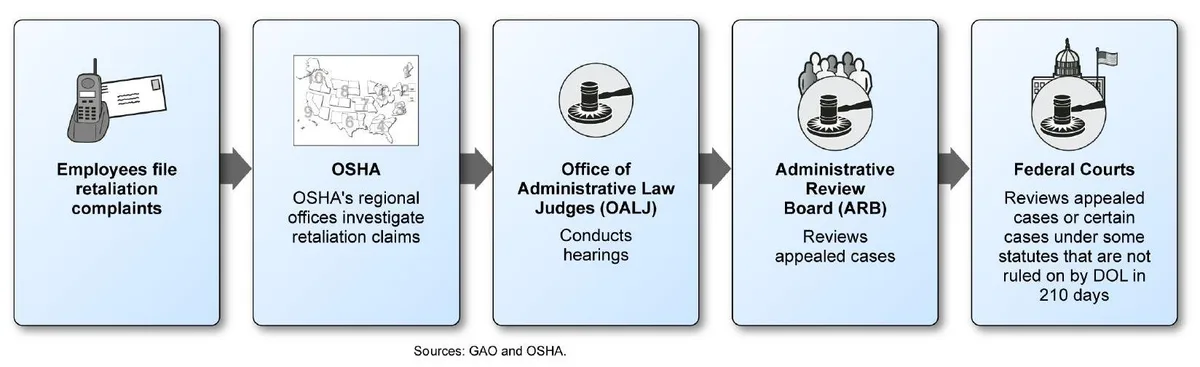
The whistleblower process then moves in stages: filing, review, inquiry, and remedy. Congress set one firm deadline. A retaliation claim can reach the Merit Systems Protection Board 120 days after the complaint if OSC has not moved for corrective action. Otherwise the claim stays with OSC. Current and former employees, plus job applicants, can use this channel. For related coverage, see What a Mandate Is — and How to Judge Whether an Election Gave One.
What Counts as a Protected Disclosure?
Protection covers what an employee reasonably believes is serious misconduct. The retaliation provision at 5 U.S.C. § 2302(b)(8) names five categories: We covered a connected angle in Congress Ends 76-Day DHS Shutdown With Split-the-Difference Bill.
- A violation of any law, rule, or regulation
- Gross mismanagement
- Gross waste of funds
- An abuse of authority
- A substantial and specific danger to public health or safety
The belief must be reasonable. It does not have to be proven right in hindsight. A second provision, 2302(b)(9), bars payback for helping the Special Counsel or an Inspector General. It also covers a refusal to obey an order that would break the law.
How Does a Complaint Reach Investigators?
OSC routes claims through its Online Filing Portal. The portal asks questions about the claim and takes documents as proof. It cannot carry classified material. OSC tells filers with classified files to contact the assigned attorney. Paper filers can send a PDF form by mail or email. Each filer can say whether OSC may share the filer's identity. OSC urges the online route because it improves speed and accuracy.
What Happens After a Filing?
OSC checks whether the facts appear to meet every legal element. Weak claims draw a written preliminary determination, and OSC explains its reasons. That first call is not final in most cases. The filer can answer it with more facts. Strong claims move to inquiry, and the parties may try mediation. A filer can also ask OSC to seek a stay of an adverse action.
OSC cannot delay a personnel action on its own. It asks the agency first. If the agency declines, OSC can file a stay request with the Merit Systems Protection Board. OSC states it limits stay requests to removals, lengthy suspensions, or geographic reassignments.
What Remedies and Penalties Apply?
The law lets OSC seek correction, discipline, or both, per OSC's published process. Correction puts the complainant back in the seat held absent the violation. That can mean back pay and benefits, with interest. The agency gets a chance to fix the practice before OSC files with the Board. Penalties listed by OSC include removal, demotion, a five-year bar from federal work, suspension, a reprimand, or a fine of up to $1,000.
One rule guards the case itself. An agency cannot discipline an official under OSC review without approval from OSC, per 5 U.S.C. § 1214(f). OSC keeps discretion over which cases warrant discipline rather than correction alone.
Can a Retaliation Claim Go Straight to the Board?
Yes, in some cases. The filer must ask OSC for corrective action first. The appeal can come after OSC closes the file, or 120 days after the complaint if OSC has not sought correction. Board rules for these appeals sit at 5 C.F.R. Part 1209. The Board may skip matters never raised with OSC.
Conclusion: Fixed Steps, Fixed Remedies
The whistleblower process rewards precision, per OSC's reading of the statute. Claims stand on stated legal elements, written records, and deadlines. The five disclosure categories set the door frame. The 120-day rule sets the clock. Remedies run from back pay with interest to removal, a five-year bar, or a $1,000 fine.