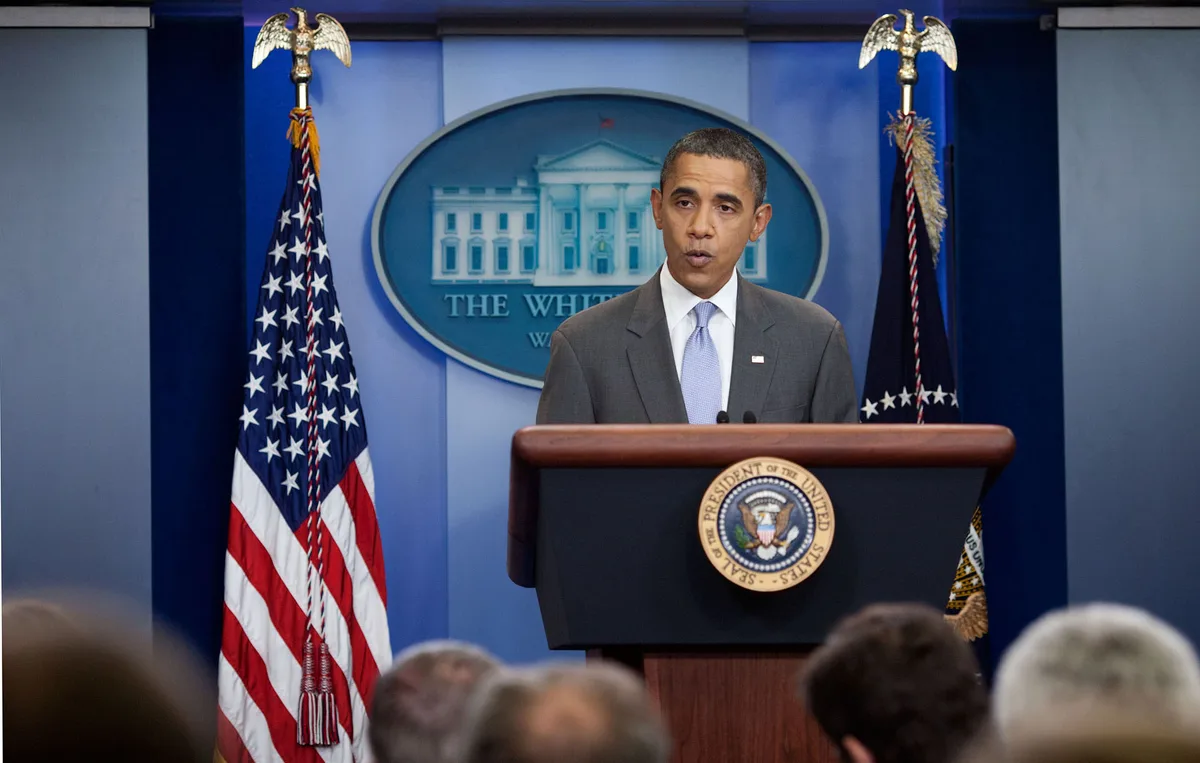
Winners call their victories mandates. Losers call the same results narrow wins. Both can be right, because a mandate is not a fact an election produces. It is an interpretation placed on a result after the votes are counted.
The dictionary definition is straightforward. A mandate, in the political sense, is "a command or authorization to act in a particular way on a public issue given by the electorate to its representative," according to Dictionary.com. The harder question is what counts as the command, and how big the authorization has to be. There is no settled threshold. As the Wikipedia overview of the concept puts it, there is "no agreed upon metric for how much support a position must have" before a mandate exists.
That gap between definition and measurement is where most mandate arguments live. This article sets out three tests a reader can apply to any such claim: the size of the margin, the specificity of the agenda, and whether government is divided. None of the three is decisive alone. Together they separate a platform voters actually chose from a platform a winner wishes they had.
What does the word "mandate" actually mean?
The word carries two related meanings. As a noun, it is the authority granted to a government. As a verb, it means to order or require something by law. The Cambridge Dictionary lists the political sense as "the support or commission given to a government and its policies through an electoral victory," in the British definition Collins supplies for the same entry.
The concept is old but not ancient. Ideas of popular rule as the source of legitimacy developed around the year 1500, per the Wikipedia account, and became politically central during the Age of Revolution, when the French Revolution invoked popular mandate as a requirement for legitimate government. Before that, rulers justified power through religious authority or inheritance, not through voter preference.
In modern use, the term does real work: it gives a winning party leeway. A claim of mandate tells legislators, courts and the public that a policy was not merely preferred by the winner but endorsed by the electorate. That is why the claim is worth scrutinizing rather than dismissing.
How big does a margin have to be?
Margins matter, but not in the way winners usually imply. The Wikipedia article notes that wider margins of victory are often cited as evidence of a mandate, and it offers historical yardsticks: Warren Harding's 1920 popular-vote margin was 26.2 percentage points. By contrast, it records that Donald Trump described his 2024 victory as a mandate while receiving 49.8 percent of the popular vote, a 1.5-point margin that ranks in the 20th percentile of presidential elections since 1828, using American Presidency Project data compiled by John Woolley and Gerhard Peters.
Two lessons follow. First, a narrow win does not disprove a mandate claim by itself; voters can coalesce behind a specific agenda even in a close race. Second, a narrow win makes the agenda test more important, because the margin offers little independent evidence that the platform, rather than the candidate's personal appeal or economic conditions, drove the result.
The practical question to ask is not "was the margin large?" but "what share of voters picked this party at all?" In a two-candidate race, half the electorate plus one is the mathematical floor. Anything close to that floor leaves the winner arguing from a result the loser nearly matched.
Did voters choose the agenda, or just the candidate?
This is the strongest test, and the one most often skipped. A mandate attaches to policies, not to people. Mandate theory, as the Wikipedia article describes it, treats parties as vehicles for policy options: voters pick an option, and the election empowers the most-supported policies. But that mechanism only works if the policies were visible and central before the vote.
Three questions sharpen it. Was the policy stated clearly during the campaign, or does it appear in the platform but not in the speeches? Was it distinctive, meaning voters could not have confused it with the other side's position? Did the winner campaign on it, or only mention it after victory? A policy that fails all three has weak claim to voter endorsement, whatever the margin.
The counter-argument deserves its say. Supporters of deliberative democracy, again per the Wikipedia account, reject mandate theory altogether. On that view, voters elect representatives to negotiate and compromise, not to execute a fixed platform. Under this reading, a mandate claim is a debating position, not a description of what elections do. The claim still has political force — it only matters if widely accepted, as the article notes — but force is not the same as proof.
What does divided government do to a mandate claim?
Divided government is the quiet killer of mandate claims. If one party wins the presidency and the other holds a chamber of Congress, the voters have issued two instructions at once, and they point in different directions. The winner can claim a mandate for the platform; the opposition can claim a mandate to check it. Both claims rest on the same election.
The same logic applies within a single party. Coalition systems make this explicit: when several parties share power, none holds a majority of voters, so no single platform can claim one, as the Wikipedia article observes of multi-party systems. The United States avoids formal coalitions, but a slim Senate majority with a handful of moderates functions much like one. The median member, not the platform, sets what passes.
Scholars have tried to formalize this with the "median mandate" — the idea that the policy preferences of the median voter are what elections convey. The Wikipedia article notes the difficulty: median preferences are often complex and span multiple dimensions, so no single platform can represent them cleanly.
What this means for reading the next mandate claim
Our analysis reduces to a short checklist. When a winner asserts a mandate, look up three things before accepting or rejecting the claim:
- The margin. Find the actual vote share, not the electoral count. A result near 50 percent carries less independent evidence than a landslide, though it does not end the argument.
- The agenda. Ask whether the specific policy was campaigned on, stated distinctly, and central to the race. A mandate claimed for a policy never mentioned before Election Day is an invention.
- The structure. Check which chambers and offices each party holds. Divided government means the electorate gave two answers, and the winner's answer is only half the record.
None of this settles the argument in advance, which is the point. A mandate claim is a bargaining move inside a continuing negotiation over what the voters wanted. The tests above do not say who is right. They say who has the better evidence, and by how much.
For readers tracking how these questions will surface in practice, the coming cycle offers plenty of material: control of Congress determines whether any president's agenda reaches a floor vote, as we explain in Why Control of Congress Is the Whole Ballgame in 2026, and the specific seats in play shape how far any majority can push, covered in Which Senate Seats Are Up in 2026. More coverage sits in our politics section, with policy mechanics in policy and structured two-side treatments in debate.
Where the debate goes from here
The evidence supports a modest conclusion. Elections produce winners and vote shares. Mandates are built on top of both, by argument. The concept has real history — legitimacy through popular assent is a few centuries old — and real function, since it shapes what legislators believe voters will accept. But it is an interpretation, and interpretations can be tested against margins, agendas and institutional structure.
What remains unknown is exactly what the Wikipedia account flags: no agreed metric exists for how much support converts a win into a mandate. Until one does, every claim should be read as an opening bid, and judged by the evidence behind it rather than the confidence of the person making it.