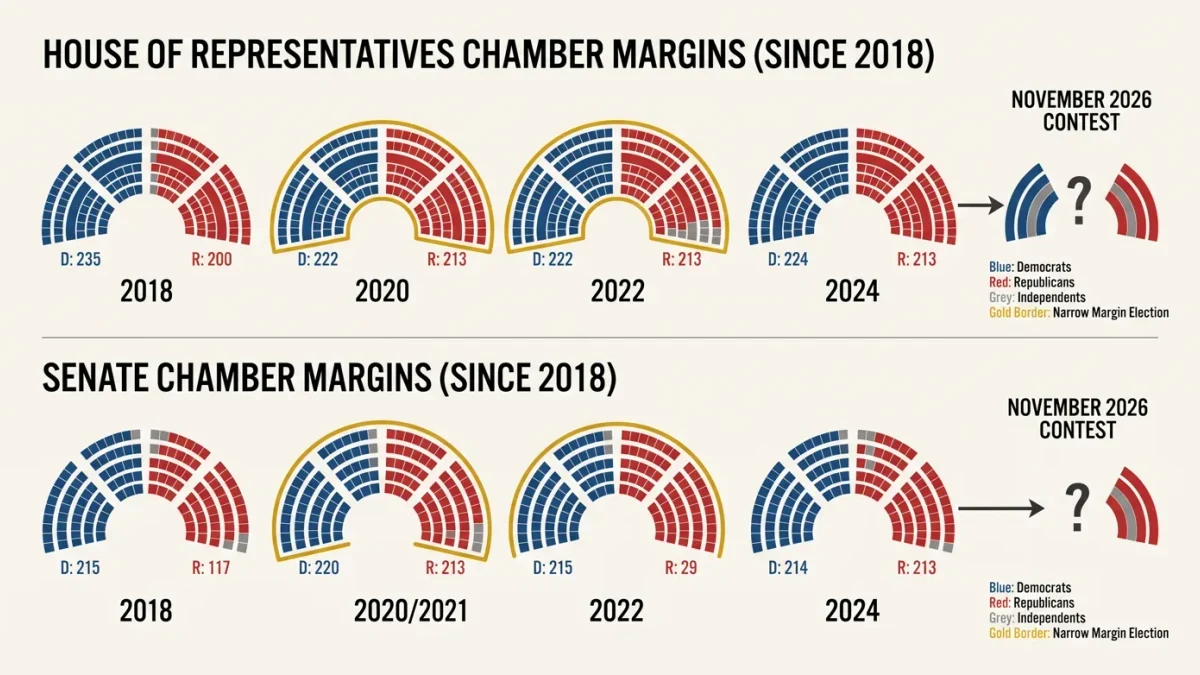
Every seat in the House and 35 in the Senate are on the November 3, 2026 ballot, and the outcome decides not just a party label but the machinery of federal power: who chairs committees, who controls the floor schedule, whose subpoenas carry, and which presidents get their judges and nominees confirmed. Since the current era of narrow majorities began in 2018, control of one or both chambers has flipped or hung on a handful of seats three times — in 2018, 2020, and 2022 the House majority was decided by fewer than a dozen contests.
What does a majority actually control in the House?
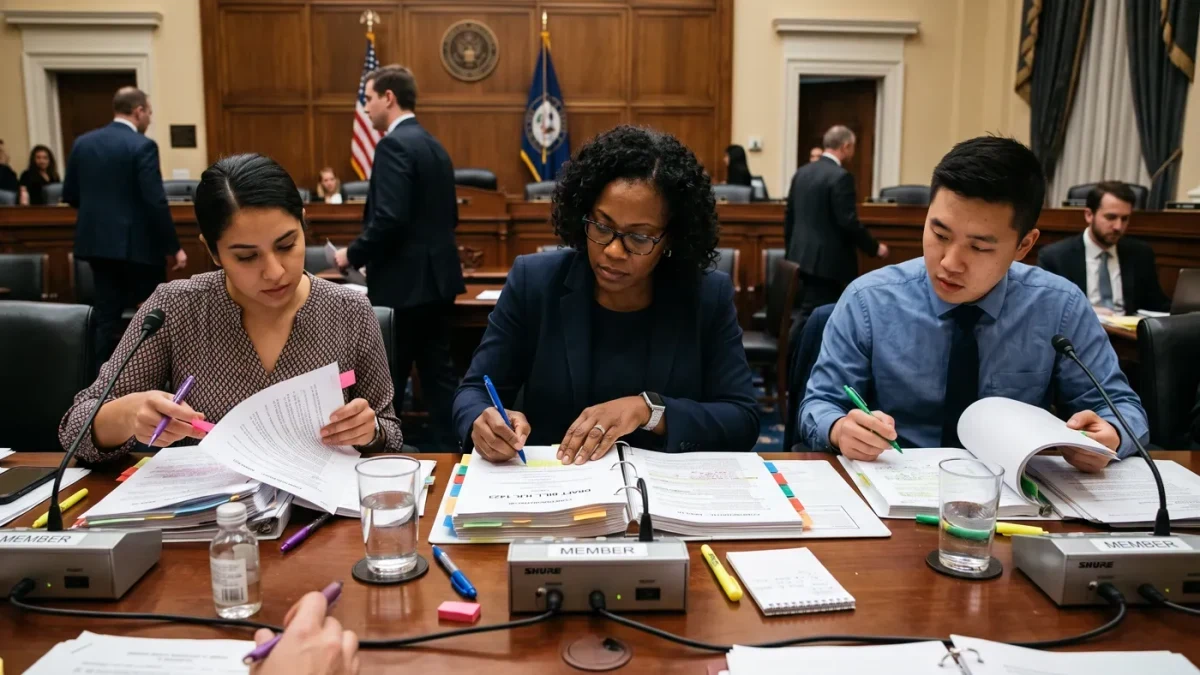
Near-total procedural power. The Speaker sets the calendar, deciding which bills reach a vote and when; the Rules Committee, majority-appointed, writes the terms of debate for every significant bill; committee chairs control hearings, markups, and — critically — subpoena authority for oversight. The majority party also controls the House's internal discipline: the motion to vacate the chair, which removed one Speaker in 2023 under the current rules. A minority in the House can pass nothing, subpoena no one, and force votes only through the discharge petition, rarely successful. That is why a five-seat swing reorganizes the entire institution.
What does the Senate majority control?
The calendar through the majority leader's power to set the floor agenda, committee chairs, and — since the 2013 and 2017 precedent changes — confirmation of every judicial and executive nominee by simple majority. The Senate's 60-vote legislative filibuster still constrains ordinary lawmaking, but confirmations are majority-rule: a Senate majority has confirmed hundreds of federal judges over recent administrations, and those lifetime appointments outlast the majorities that made them. The majority also controls which oversight investigations the chamber convenes — the mirror-image of the House's, as the 2023–2025 cycles demonstrated when each chamber's majority ran its own set of investigations of the opposing administration.
- House majority: speakership, Rules Committee, subpoena power, calendar.
- Senate majority: leader's agenda control, committee gavels, nominations at 51 votes.
- Filibuster: still bars most ordinary Senate legislation short of 60 votes.
What are the 2026 stakes in practice?
The midterm is a referendum on a first-term president's party by historical pattern: the president's party has lost House seats in 19 of 21 postwar midterms, per the American Presidency Project's compilation. On the line in 2026: the remainder of the appropriations cycle, including whether the Homeland Security standoff that closed in April becomes a template for the next fiscal year; the confirmation pipeline for any Supreme Court vacancy — four justices are past age 65 as of 2026; oversight direction, since House control would hand subpoena power to whichever party currently lacks it; and the 2027 policy agenda, from tax-law extensions to health programs, all of which depend on who holds the gavels.
How narrow can a majority be and still function?
Narrowly. A one-to-five seat House majority means any faction of a handful of members can block floor action — the 2023 speaker election took 15 ballots and the majority's internal disputes repeatedly stalled appropriations. In the Senate, a 50–50 split makes the vice president the tiebreaker and each senator leverage personified. The 2026 map, with 22 Republican-held Senate seats and 13 Democratic-held ones plus two specials, makes a Democratic Senate takeover a steep climb but a House flip historically plausible — the combination most poll-based forecasters have treated as the modal outcome for most postwar first-term midterms.
LMH News publishes information, not political advice. Historical patterns reflect official election records through 2024.