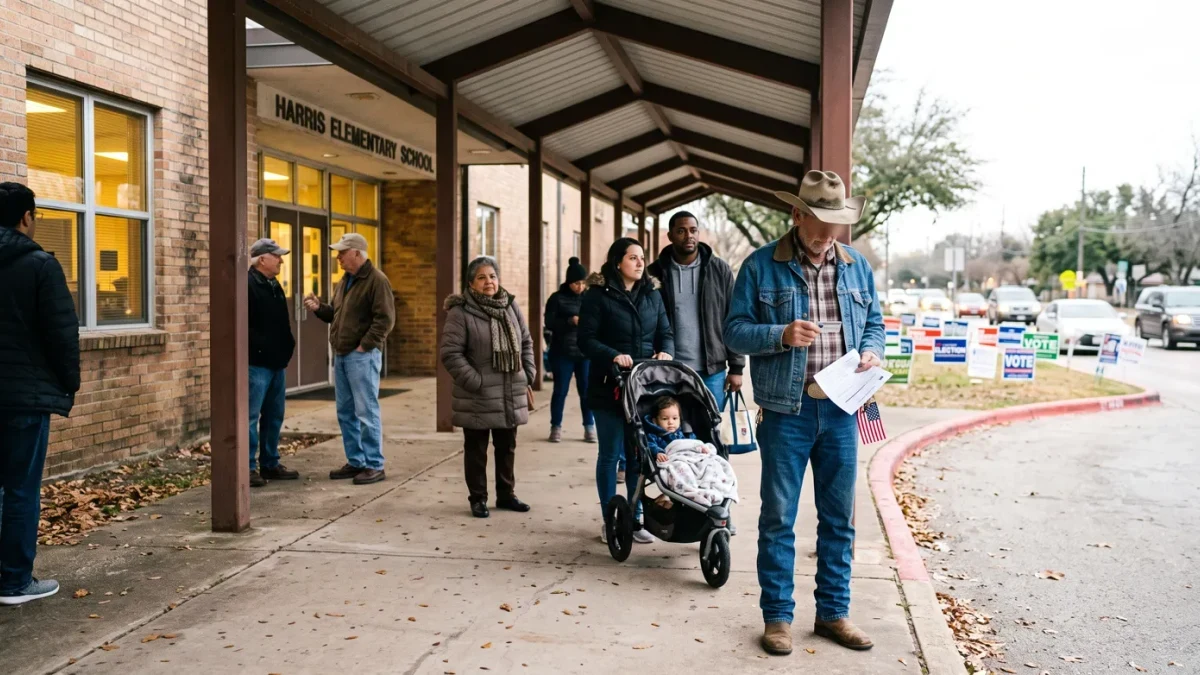
Texas kicked off the 2026 midterm primary season on March 3, alongside North Carolina and Arkansas, with voters choosing major-party nominees for governor, a U.S. Senate seat, and all 38 U.S. House districts, per the Texas Secretary of State's published calendar. Any race where no candidate exceeds 50 percent advances to a runoff on May 26. The general election is November 3.
What was on the Texas ballot?
The marquee race was for governor, which topped both parties' ballots alongside the down-ballot statewide offices. The U.S. Senate race featured Republican incumbent John Cornyn, who faced primary opposition from his right flank — a repeat of the 2020 dynamic — while Democrats competed for the nomination to challenge him in a general election in a state no Democrat has won statewide since 1994. All 38 congressional districts held primaries, the first test of the maps drawn after the 2020 census and repeatedly litigated through 2025. Early voting in Texas ran through February 27, and the Secretary of State's office reported turnout consistent with prior midterm primaries.
What did North Carolina and Arkansas decide?
North Carolina held primaries for its governor's race — an open seat — and its 14 House districts, several reshaped by the state's latest redistricting round. Arkansas featured down-ballot statewide offices and its four House seats. The March 3 states matter beyond their borders because they are first: they set the donor and narrative momentum for the rest of the calendar, and the runoff structure in Texas means final nominees there may not be known until late May.
What happens next in the primary calendar?
The calendar accelerates through spring: Illinois, Ohio, and West Virginia vote in the second half of March, followed by the early-May cluster including Indiana and Ohio's municipal deadlines, and the Texas and Oklahoma runoffs on May 26. California and New Jersey — the June mega-states with House majorities potentially in play — hold their top-two and closed primaries in early June. Primary outcomes lock in the general-election matchups that will decide control of the House, where all 435 seats are up, and the Senate, where 35 seats are on the ballot.
LMH News publishes information, not political advice. Dates and race details are drawn from the secretaries of state and official results as of March 4, 2026.