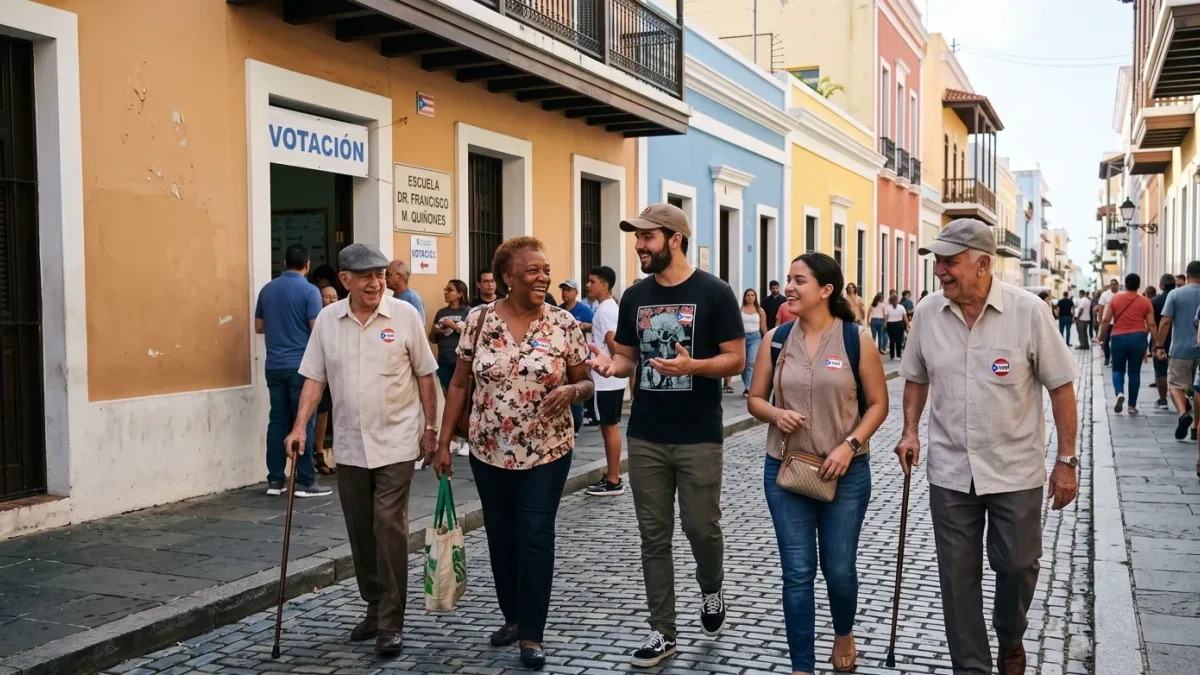
Puerto Rico's 3.2 million residents are U.S. citizens who carry U.S. passports, pay most federal taxes — payroll, excise, and import duties, though not federal income tax on island-source income — and serve in the military, yet have no voting representation in Congress and cannot vote for president. The status question — statehood, independence, or the current free-associated-state arrangement — has been contested for a century, with plebiscites in 2012, 2017, 2020, and November 2024, the last of which showed statehood narrowly winning a three-option ballot, per the island election commission's certified results.
What is the case for statehood?
Statehood advocates — the New Progressive Party on the island, Resident Commissioner Jenniffer González-Colón, the Republican who represents Puerto Rico in Congress, and Democrats including Senators Marco Rubio-adjacent supporters of the Puerto Rico Status Act passed by the House in 2022 — argue citizenship without representation violates the country's first principle. Their claims: the island's 43 percent poverty rate is structurally linked to its territorial status, which caps Medicaid and nutrition funding at formulas far below states' and deters outside investment by leaving legal rules changeable by Congress; statehood would deliver full federal benefits, equal treatment in tax credits like the child tax credit currently limited on the island, and voting power — two senators and an estimated four House seats; and equal citizenship inside the union is the only option that ends the democratic deficit without asking 3 million people to surrender the citizenship they hold. Their strongest version: the island has voted for statehood repeatedly, and a democracy cannot hold citizens in a second-class status indefinitely while they petition for admission on the terms the Constitution provides.
What is the case against statehood — and for what?
Opponents divide between independence advocates — the Puerto Rican Independence Party and the broader sovereignty movement — and defenders of an enhanced commonwealth. Independence advocates argue statehood means assimilation: a Spanish-speaking nation absorbed into the Anglo federation, losing language policy control, Olympic and international presence, and cultural autonomy, and they note the 2024 plebiscite's statehood plurality fell short of a majority while independence-plus-sovereignty options combined rivaled it. Enhanced-commonwealth defenders argue for a negotiated association with fuller autonomy and continued citizenship. Practical objections cut across camps: fiscal hawks in Congress, per Congressional Budget Office cost estimates commissioned for the 2022 bill, put statehood's net federal cost in the tens of billions over a decade — mostly expanded benefits and tax credits — and English-only movements in some states signal cultural friction. Political skeptics also note the partisan fight: Washington Republicans have long assumed two new Democratic senators, though the island's own politics are not mainland-progressive, and both parties' calculations have blocked any bill for a century. Their strongest version: statehood is irreversible — the Constitution has no exit clause — and a permanent union should not rest on a plurality plebiscite contested at home.
What would the process actually be?
Admission requires a simple majority Act of Congress and the president's signature — Puerto Rico is a territory under the Territory Clause, and Congress holds plenary power. The House passed the Puerto Rico Status Act in December 2022, defining statehood, independence, and sovereignty-in-free-association options and binding the winner to a transition; the Senate never took it up, and reintroductions in subsequent Congresses have not reached the floor. A binding plebiscite under federal sponsorship is the predicate every version of the bill shares.
LMH News publishes information, not political advice. Positions are attributed to their named advocates; this primer presents each side at comparable length and endorses neither.