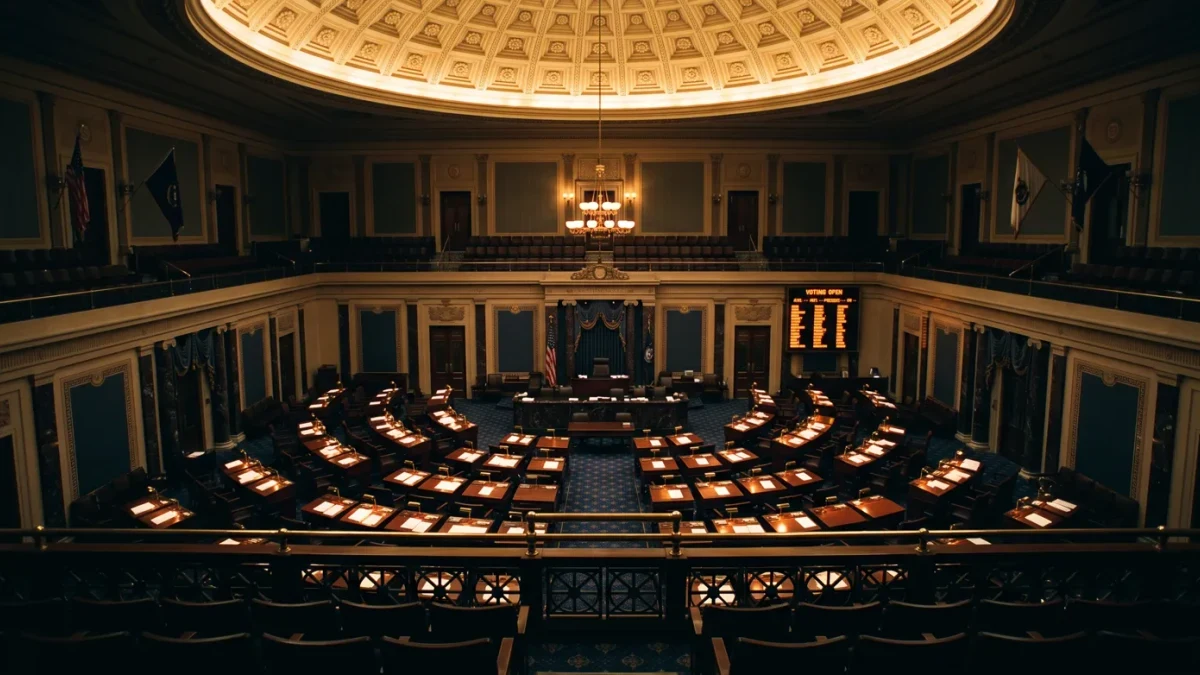
Budget reconciliation is the process that lets a simple Senate majority — 51 votes, or 50 plus the vice president — to pass changes to taxes, spending, and the debt limit without needing the 60 votes usually required to end debate. The Congressional Budget Act of 1974 created it, and Congress has sent more than 20 reconciliation bills into law since 1980, including major tax packages in 2001, 2017, and 2025. The trade-off is that everything in the package must fit tight fiscal rules, and the Senate parliamentarian can strike provisions that do not.
What does reconciliation actually allow?
Reconciliation is a tool for changing laws that directly alter federal revenue, spending, or the debt limit. A reconciliation bill starts with a budget resolution: a concurrent resolution setting spending ceilings for the coming fiscal year that both chambers adopt by simple majority. That resolution can include reconciliation instructions, which direct specific committees to report changes within their jurisdiction by a set date and within a set dollar amount. The committees produce the policy; the Budget Committee in each chamber bundles the pieces into one omnibus bill.
Both chambers then vote. The House passes it by simple majority under a special rule. In the Senate, debate is capped at 20 hours, amendments are limited, and the 60-vote cloture threshold does not apply — which is the entire point of the exercise. Simple majorities on final passage have carried every reconciliation bill that became law.
Which provisions survive and which get struck?
The limiting rule is the Byrd rule, named for Senator Robert C. Byrd of West Virginia, adopted in 1985 and made permanent in 1990. A provision is extraneous — and can be removed on a point of order — if it does not change spending or revenue, if it changes Social Security, if it produces only incidental budget effects, or if it would increase the deficit outside the budget window. Senators routinely use Byrd points of order to force votes on stripping contested language, and a waiver of the rule needs 60 votes, which the majority usually cannot get.
The Senate parliamentarian — a nonpartisan official, currently Elizabeth MacDonough — advises the presiding officer on whether provisions comply. Her rulings in practice determine what stays. In 2025, per Senate records, she advised against including a minimum-wage increase and immigration provisions in that year's reconciliation package because their budget effects were incidental to their policy purpose, and both were removed.
What are the practical constraints on using it?
Reconciliation is rationed. Each budget resolution can generate at most one reconciliation bill per instruction area — roughly one tax-and-spending package, one health package if instructed separately, and one debt-limit provision — per fiscal year. There is no unlimited replay: a new resolution is needed each time, and resolutions do not require the president's signature, so a chamber majority can adopt revised instructions mid-year, which is how Congress occasionally passes a second technical-corrections bill.
- Timing: 20 hours of Senate debate, then votes with no further amendment beyond a specified set.
- Scope: no Social Security changes, no purely regulatory policy dressed up with a token fee.
- Deficit test: outside the resolution's window, the bill cannot raise the deficit (the “Byrd bath” scrub happens before floor action).
Why does reconciliation matter for policy in 2026?
Because the filibuster otherwise sets a 60-vote floor for most legislation, and narrow majorities rarely hold 60 seats, reconciliation is often the only vehicle that can move a partisan fiscal agenda. In 2025, the Republican Congress used it to enact a tax-and-spanding package covering individual tax rates, Medicaid provisions, and defense funding, per the official law text published by Congress.gov. In 2026, with the midterm elections in November, both parties' policy plans — Democratic health-care expansions or Republican further tax extensions — run through the same arithmetic: win the majority, adopt a budget resolution, keep the package inside the Byrd rules.
LMH News publishes information, not political or investment advice. Procedural descriptions here reflect the Congressional Budget Act, Senate rules, and public records as of the 1974 act as amended through 2025.