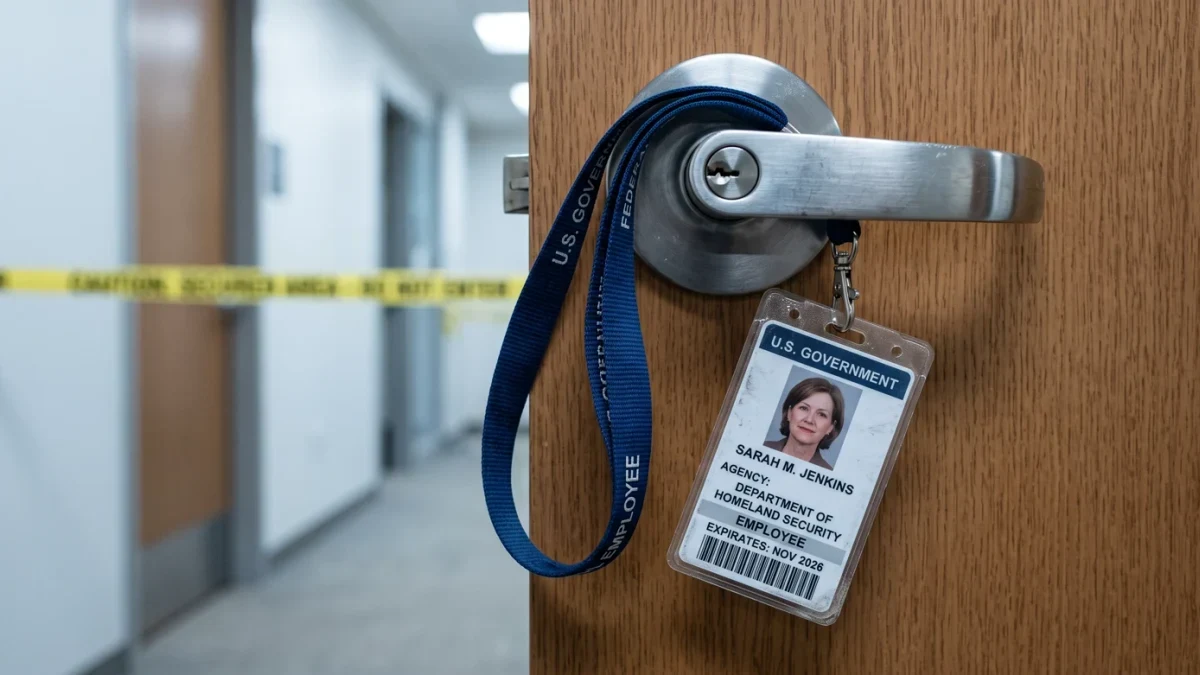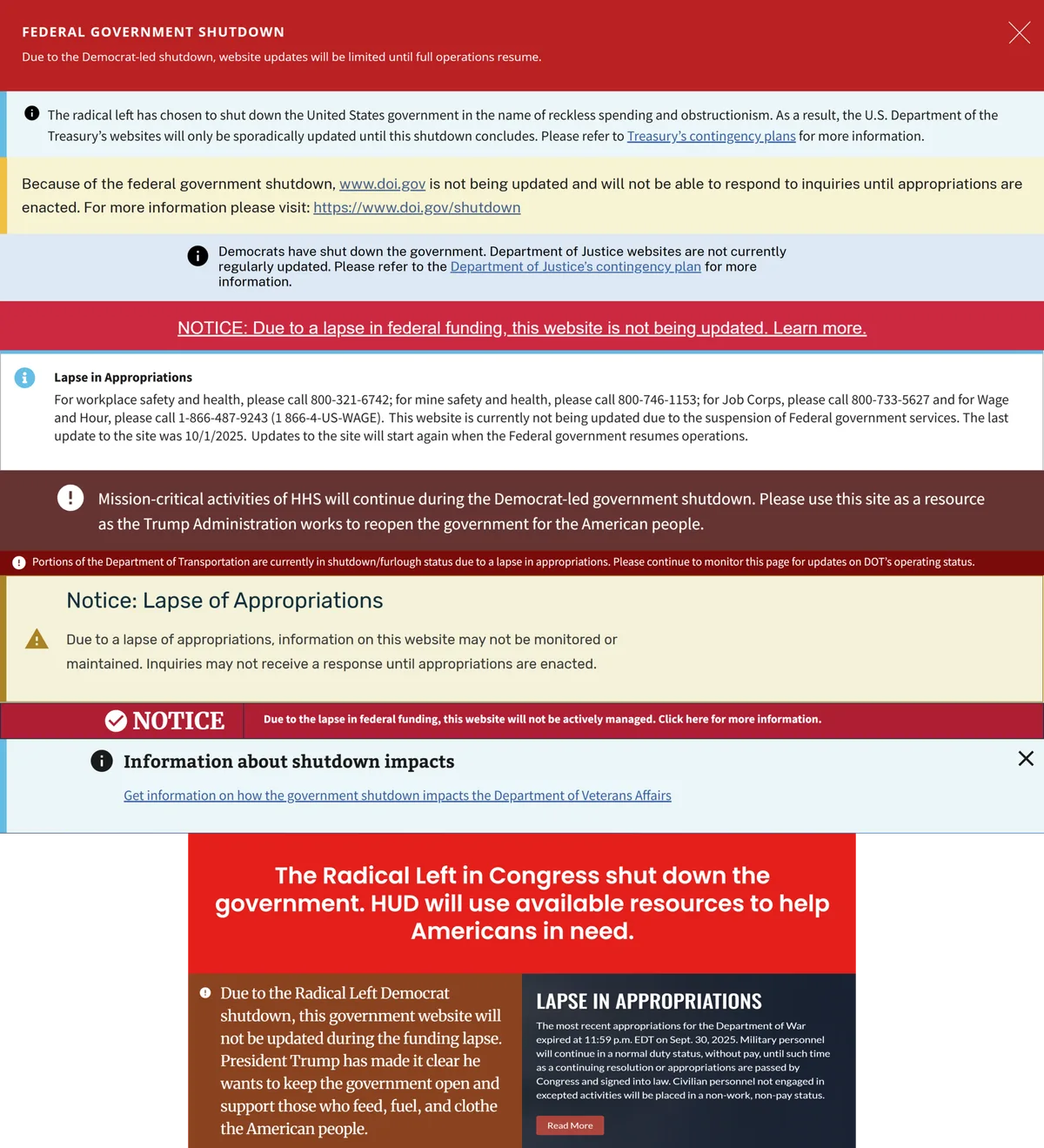
The partial shutdown of the Department of Homeland Security entered its second month in mid-March 2026, with no agreement between Senate Democrats, who are withholding votes for a full-year funding bill until it includes enforcement-oversight provisions, and Republicans, who control both chambers but need Democratic votes to clear the 60-vote Senate threshold. The lapse began February 14, when the two-week stopgap passed on February 3 expired without a successor, per the congressional funding record.
What is still running, and what has stopped?
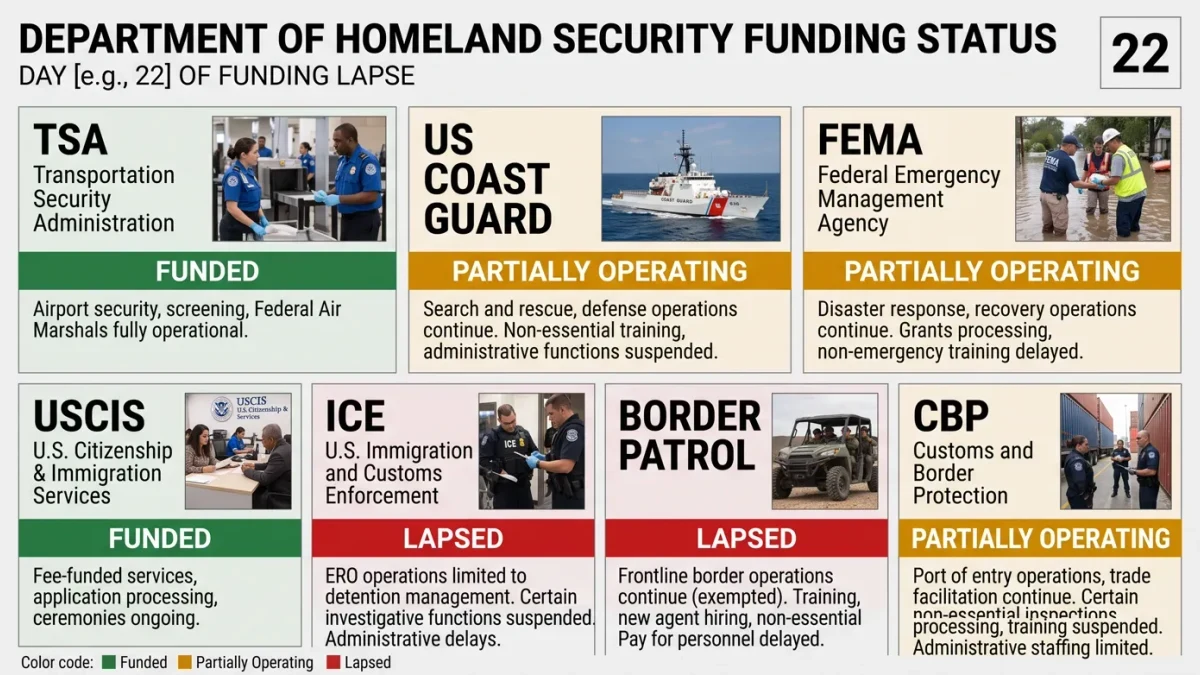
Because the lapse is DHS-only, the rest of the government is funded under the full-year appropriations signed in February. Within the department, enforcement personnel funded through earlier legislation — Immigration and Customs Enforcement and Border Patrol — have continued operating, while TSA officers, Coast Guard civilian staff, and FEMA's non-disaster work have been hit by the lapse, operating under contingency plans with delayed pay. USCIS has continued largely unbroken because its adjudications are fee-funded, though E-Verify, the electronic employment-verification system, has been suspended, per the agency's shutdown posture statements.
What are the two sides demanding?
Senate Democrats have said their votes for a full-year DHS bill depend on reforms to enforcement conduct: requirements that agents wear body cameras during certain operations and that judicial warrants precede arrests in sensitive locations — provisions they pressed after a January 24 Customs and Border Protection shooting of a U.S. citizen, Alex Pretti. Republican leaders have called the riders a poison pill and offered clean short-term extensions; the president has said he will not negotiate a broader immigration deal until Congress passes election-integrity legislation he supports. Each side has blocked the other's motions during pro forma sessions: Democrats forcing votes to reopen, Republicans forcing votes on clean stopgaps — with neither clearing the threshold, per Senate floor records.
What happens next?
The procedural paths are narrow. A negotiated omnibus provision could ride on the next must-pass vehicle, and past stopgap fights suggest that when leaders allow a straight vote, bipartisan majorities exist to fund the department even minus the contested enforcement components. In the meantime, the costs accrue: past shutdowns have shown delayed pay pushing attrition at TSA and Coast Guard, and contractors' invoices frozen until appropriations return. The precedent from the 2018–19 and 2026 January lapses is that resolution comes when one side accepts less than its stated demands — the question is which, and at what point the political cost of the standoff exceeds the cost of the concession.
LMH News publishes information, not political advice. Facts are drawn from the public funding record, agency contingency statements, and each party's on-record positions.