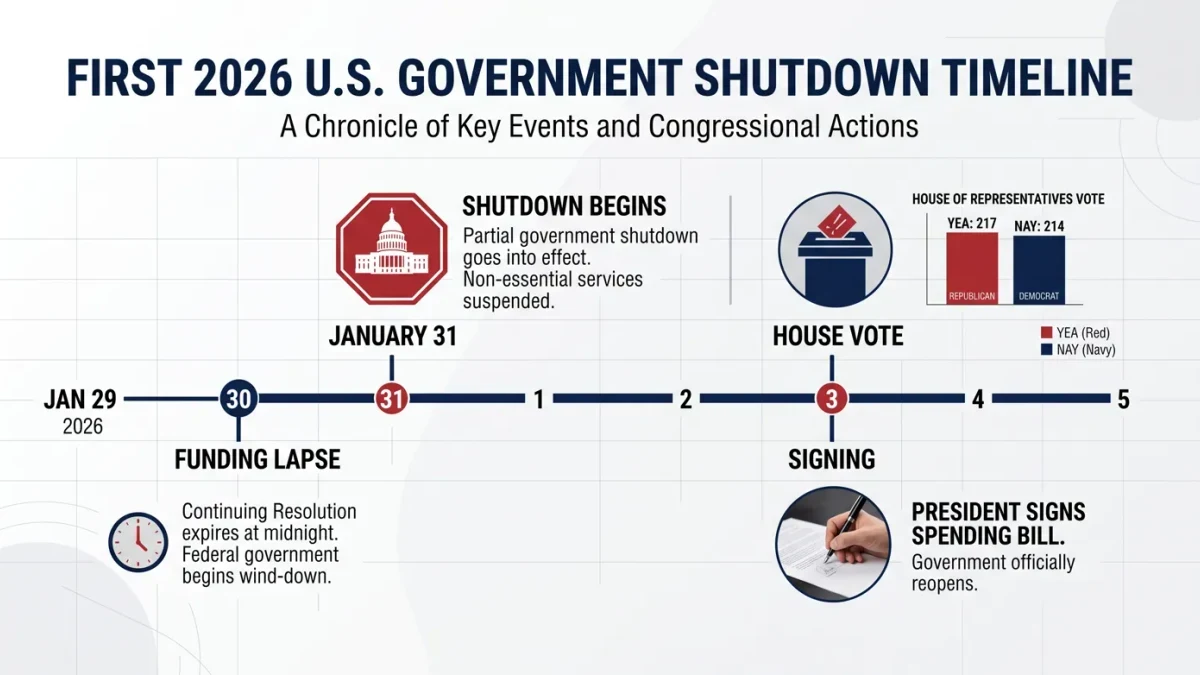
The federal government's first shutdown of 2026 ended February 3 after four days, when the House voted 217 to 214 to clear a Senate-passed package funding five departments through the fiscal year and the Department of Homeland Security for two more weeks. Twenty-one Republicans and twenty-one Democrats crossed party lines on the vote, and President Donald Trump signed the measure the same day, restoring funding to agencies that had lapsed when money ran out on January 30, per the bill text published by Congress.gov.
What caused the lapse?
Funding for most of the government ran out at midnight January 30 under the stopgap Congress had passed after the 2025 fiscal fights — a bill that ended an earlier standoff but only bought time through the end of the month. The Senate had passed a full-year package covering State, Treasury, Defense, Transportation, HUD, HHS, Labor, and Education plus a short DHS continuing resolution, but the House left for the deadline without acting, and the shutdown began January 31. Nine departments and a set of independent agencies, plus parts of the judicial branch, operated under shutdown plans.
The political sticking point was DHS funding. Senate Democrats opposed a full-year homeland security bill after a Customs and Border Protection incident on January 24 in which agents shot and killed a U.S. citizen, Alex Pretti, and they demanded oversight provisions before approving the department's budget. Republicans pressed for the full-year number. The two-week DHS stopgap in the February 3 package postponed that fight rather than resolving it.
What happens next?
The DHS clock now runs to late February. Congressional leaders from both parties said after the vote that negotiations over enforcement policy — Democrats have sought body-camera requirements and judicial-warrant limits on certain enforcement actions — would continue alongside the appropriations talks. Both caucuses face internal pressure: conservatives want enforcement funding untouched, while progressives have pushed to use the DHS bill to force policy change. A second lapse remained procedurally possible if no deal cleared both chambers before the new deadline, and a DHS-only funding gap opened on February 14 when the stopgap expired without agreement.
What did the shutdown actually stop?
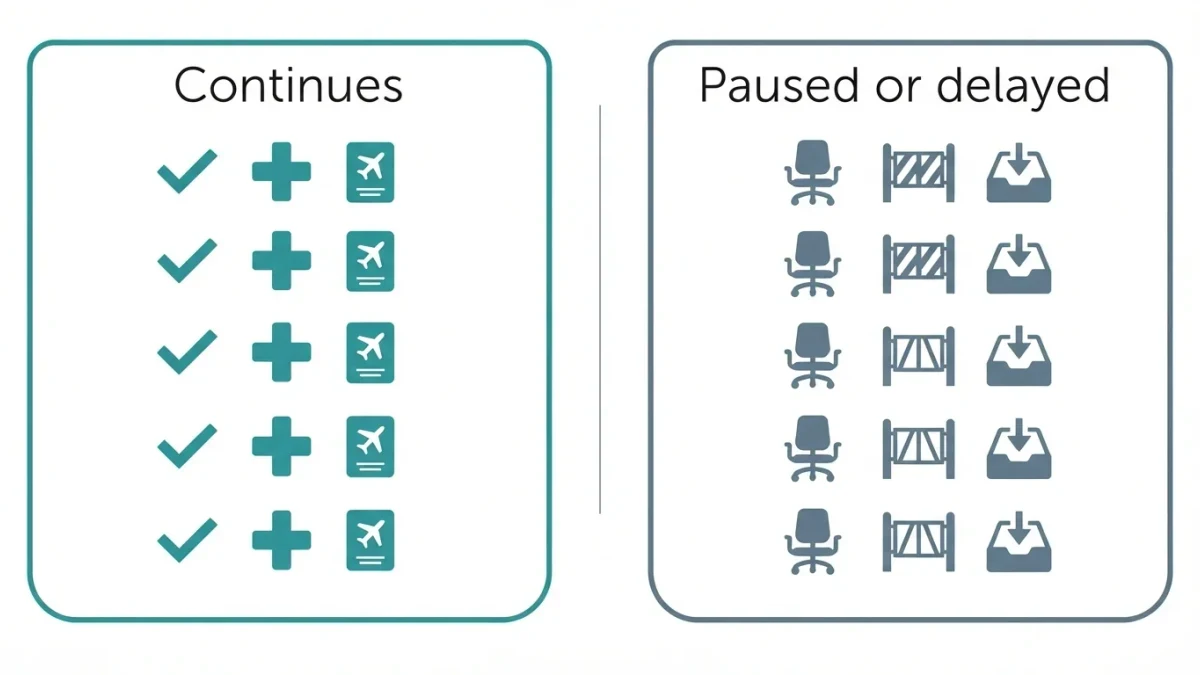
Under standard contingency plans, federal employees at unfunded agencies were furloughed, though employees deemed essential — air traffic controllers, border personnel, food inspectors — stayed on the job required to work with pay delayed. Past brief shutdowns in 2018 and early 2019 had similar mechanics: services stop, pay arrives retroactively once funding returns. Four days limited the economic damage; the Congressional Budget Office estimated the 35-day 2018–19 shutdown cost the economy $11 billion, with $3 billion permanently lost.
LMH News publishes information, not political advice. Facts are drawn from the public bill record and each party's on-record statements.